Tourist Spots
24 spots listed
Category(multiple selection allowed)
Area(multiple selection allowed)
24 results
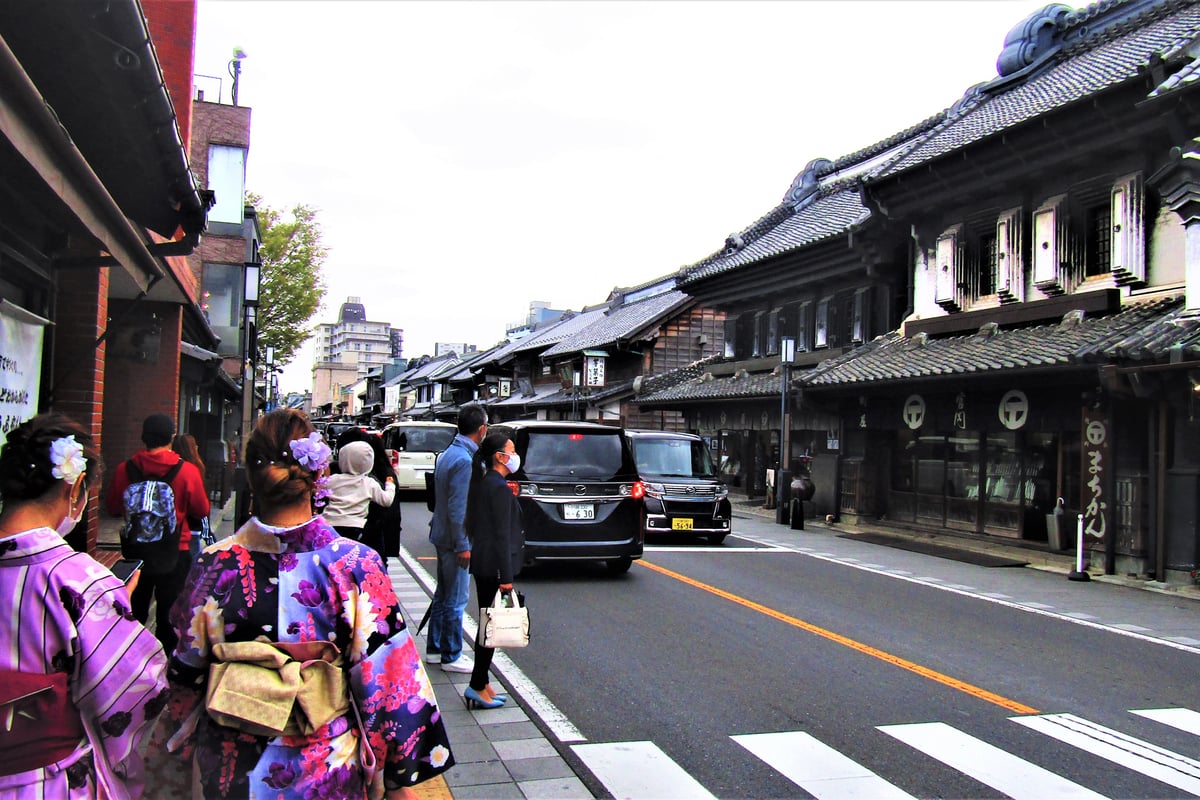
Kurazukuri Street (Ichibangai)
蔵造りの町並み(一番街)
A main street lined with roughly 400 meters of kurazukuri (traditional storehouse-style) buildings, the very symbol of Kawagoe. Learning from the devastating Kawagoe Fire of 1893 (Meiji 26), merchants competed to build imposing, fire-resistant black-plastered storehouse shops, and more than 30 of them still stand shoulder to shoulder today. In 1999 the area was designated a national "Important Preservation District for Groups of Historic Buildings," and the Toki no Kane bell tower rises midway along the street. Long-established kimono fabric shops, a kurazukuri museum, and Taisho- and Showa-era Western-style buildings mingle here, creating a distinctive streetscape where the Edo period and modern times overlap. With plenty of street-food stalls, souvenir shops, and kimono rental stores, it's a great place to stroll the whole street at a leisurely pace and soak up the old Edo atmosphere. Sights such as Toki no Kane, the Kurazukuri Museum, and the Osawa Family Residence are scattered along the street, which also serves as the gateway to Kashiya Yokocho and Koedo Kurari, so many travelers build their whole Kawagoe itinerary around Ichibangai as a starting point. Some buildings are lit up at night, offering a different charm from daytime.
🚶 10 min walk from Hon-Kawagoe Station
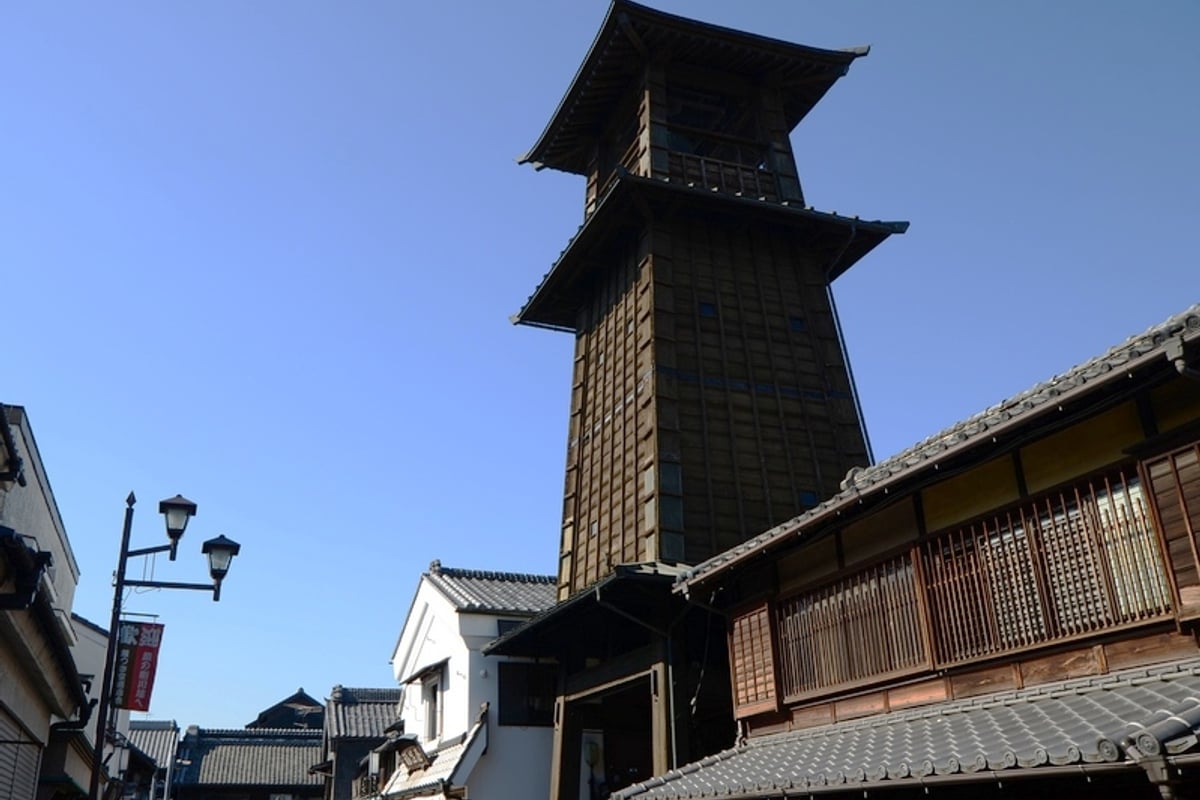
Toki no Kane (Bell Tower)
時の鐘
A roughly 16-meter-tall, three-story wooden bell tower standing just off a side alley near the middle of the kurazukuri townscape. It is said to have been first built by Sakai Tadakatsu, lord of Kawagoe Castle, during the Kan'ei era (1627-1634), and for nearly 400 years it has tolled the hours as a symbol of Kawagoe. The current tower was rebuilt the year after the great Kawagoe Fire of 1893, and even today its bell still rings out over the town four times a day — at 6:00 a.m., noon, 3:00 p.m., and 6:00 p.m. — via an automatic striking mechanism. Its sound was selected as one of the Ministry of the Environment's "100 Soundscapes of Japan to Be Preserved." Free to view, it's an iconic stop on any stroll through the kurazukuri townscape, and the wooden tower rising at the end of the alley is a popular photo spot among visitors. Long-established confectioners and sweets shops are scattered around Toki no Kane, making it a pleasant place for a leisurely walk while listening for the bell.
🚶 15 min walk from Hon-Kawagoe Station
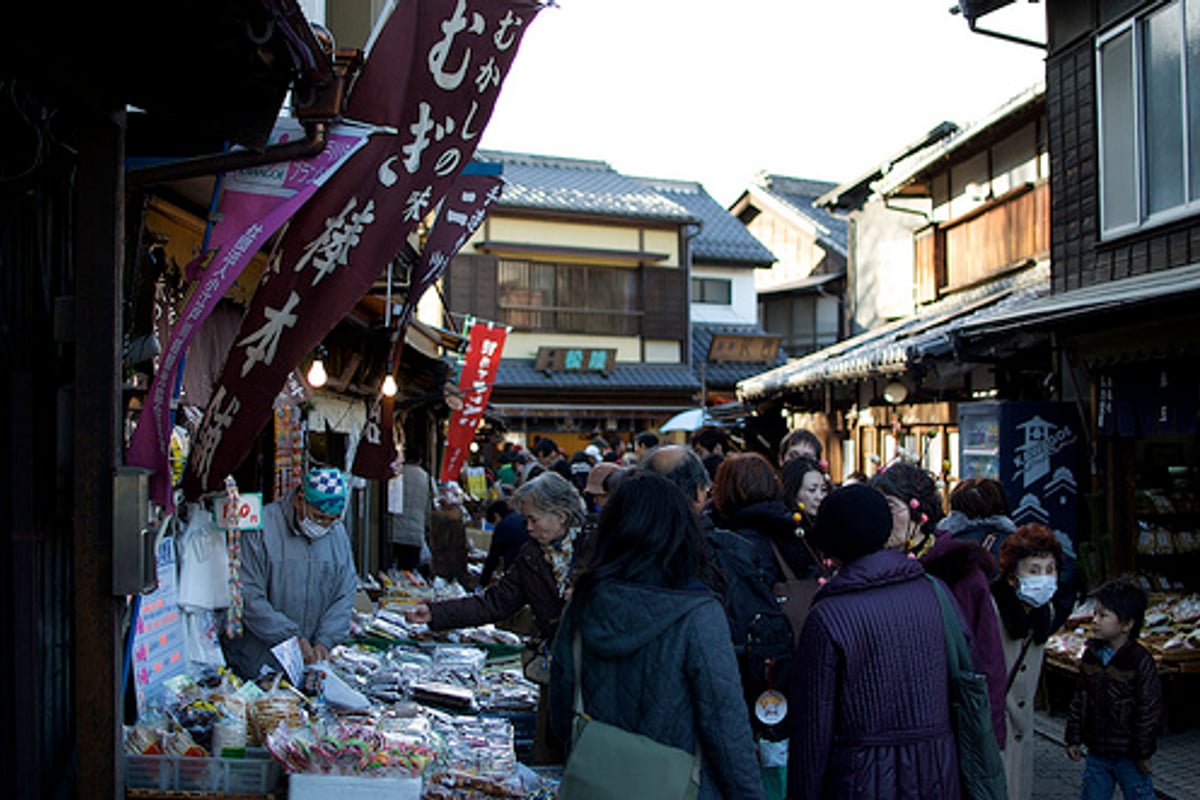
Kashiya Yokocho (Candy Alley)
菓子屋横丁
A narrow alley just west of the kurazukuri townscape, packed with about 30 old-fashioned candy shops and Japanese confectionery stores where you can snack as you stroll. Candy makers began gathering here in the early Meiji era, and after the 1923 Great Kanto Earthquake the alley developed further as a candy-supply hub for Tokyo. From nostalgic treats like fu-gashi (wheat-gluten candy) and hand-pulled candy sculptures to imo-kenpi (fried sweet potato sticks) and sweets made from Kawagoe's famous sweet potatoes, there's plenty to nibble on as you wander the alley's Taisho- and Showa-era retro atmosphere. Selected by the Ministry of the Environment as one of Japan's "100 Fragrant Landscapes," the alley draws crowds of tourists and families lured by its sweet, toasty aromas, making it one of Kawagoe's most popular attractions. Deep in the alley stands the Kashiya Yokocho Jizo, said to bring good matchmaking luck, so there's more to enjoy here than just snacking. Set just off the main Ichibangai street, it offers a Showa-retro atmosphere quite different from the kurazukuri townscape — a great place to pick up an assorted box of old-fashioned candy as a Kawagoe souvenir.
🚶 15 min walk from Hon-Kawagoe Station
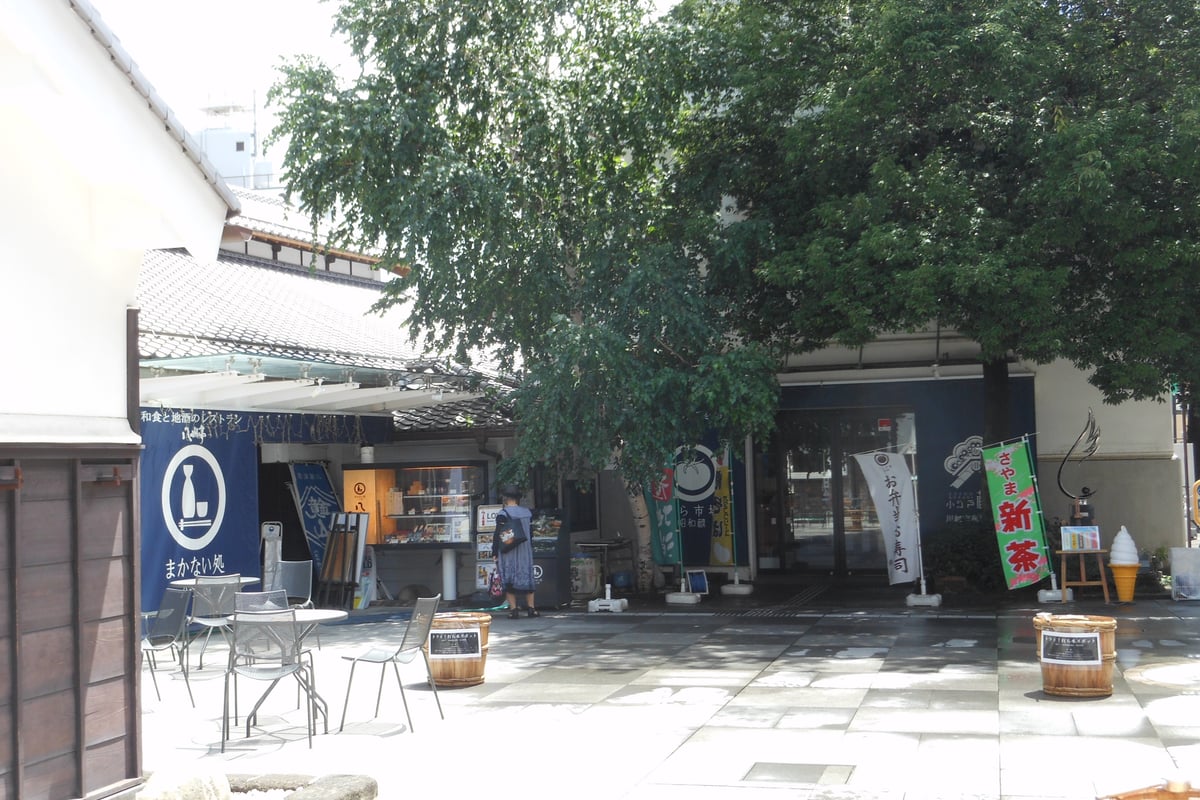
Koedo Kurari
小江戸蔵里
Just a three-minute walk from Hon-Kawagoe Station, this complex tourist facility is a renovation of the roughly 120-year-old former Kagamiyama Sake Brewery. It comprises four buildings — the Meiji Kura, Taisho Kura, Showa Kura, and Exhibition Kura — housing a market selling Kawagoe local specialties and sake from 32 breweries across Saitama Prefecture, a restaurant serving dishes made with local ingredients, and a brewery-run taproom pouring freshly brewed craft beer. The atmospheric buildings retain the imposing character of the original storehouses, making it an easy stop for souvenir hunting or a short break. Thanks to its convenient location just a short walk from the station, it's popular as a spot to visit either before or after exploring Ichibangai. Inside, you can also sense the building's history through its exposed roof beams and earthen walls, and there's a corner for tasting local Kawagoe sake as well as light meals made with Saitama-grown ingredients. Since you can gather all your Kawagoe souvenirs in one place without having to carry bags around all day, many travelers make it their last stop of the trip.
🚶 3 min walk from Hon-Kawagoe Station
Osawa Family Residence
大沢家住宅
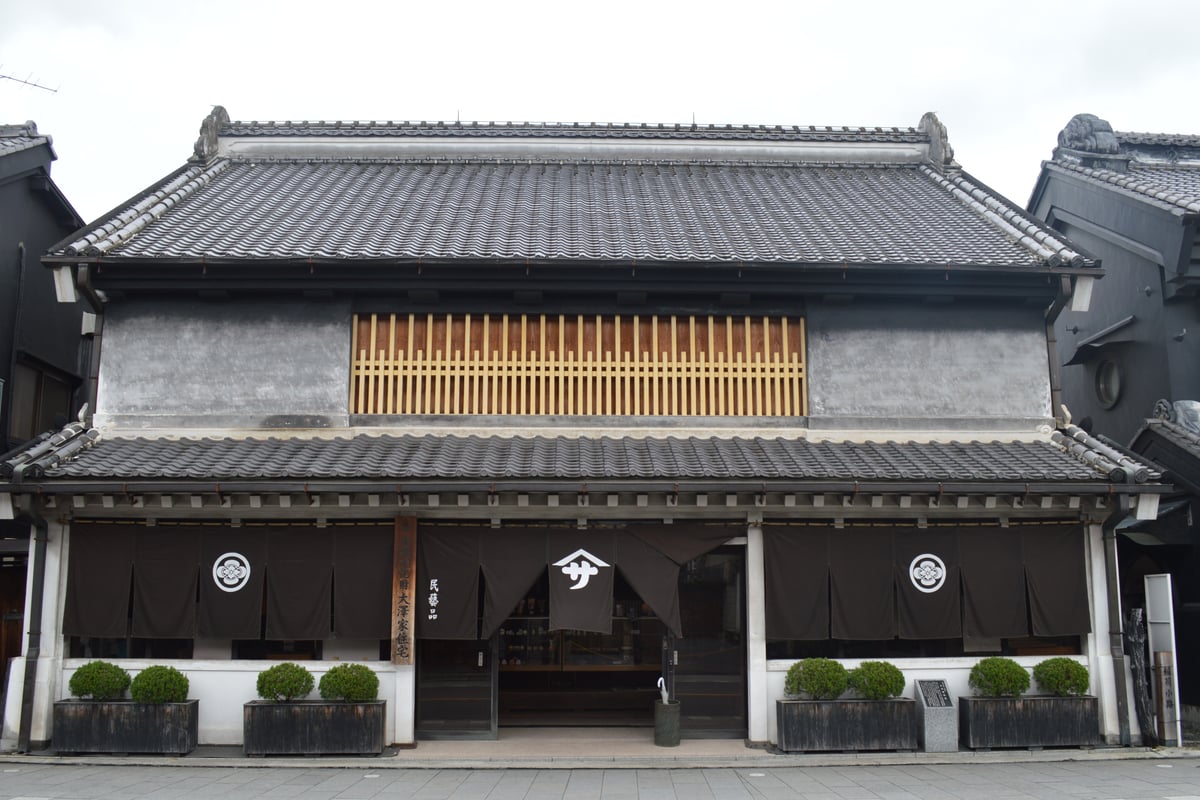
Built in 1792 (Kansei 4) by the wealthy merchant Nishimura Hanemon, originally from Omi Province, as the storehouse-style shop of his kimono-fabric business "Omiya." When a third of the town burned in the great Kawagoe Fire of 1893, this building drew attention as one of the rare structures to survive, and it went on to inspire Kawagoe merchants to compete in building their own kurazukuri storehouse shops. It is considered the oldest surviving kurazukuri building in Kawagoe and among the oldest in the Kanto region, and was designated a National Important Cultural Property in 1971. With a full two-story structure whose ground floor served as the "mise" (shop space), its plain, functional design is carefully preserved and open to the public today as the origin point of Ichibangai's kurazukuri architecture. Inside, visitors can see part of the original floor plan and tools used when it was a working merchant house, getting an up-close sense of the structure and fireproofing ingenuity of kurazukuri architecture. Comparing it with the other kurazukuri merchant houses along Ichibangai as you walk makes it easier to appreciate how the architectural style changed over time.
🚶 15 min walk from Hon-Kawagoe Station
Kawagoe Matsuri Kaikan (Festival Museum)
川越まつり会館
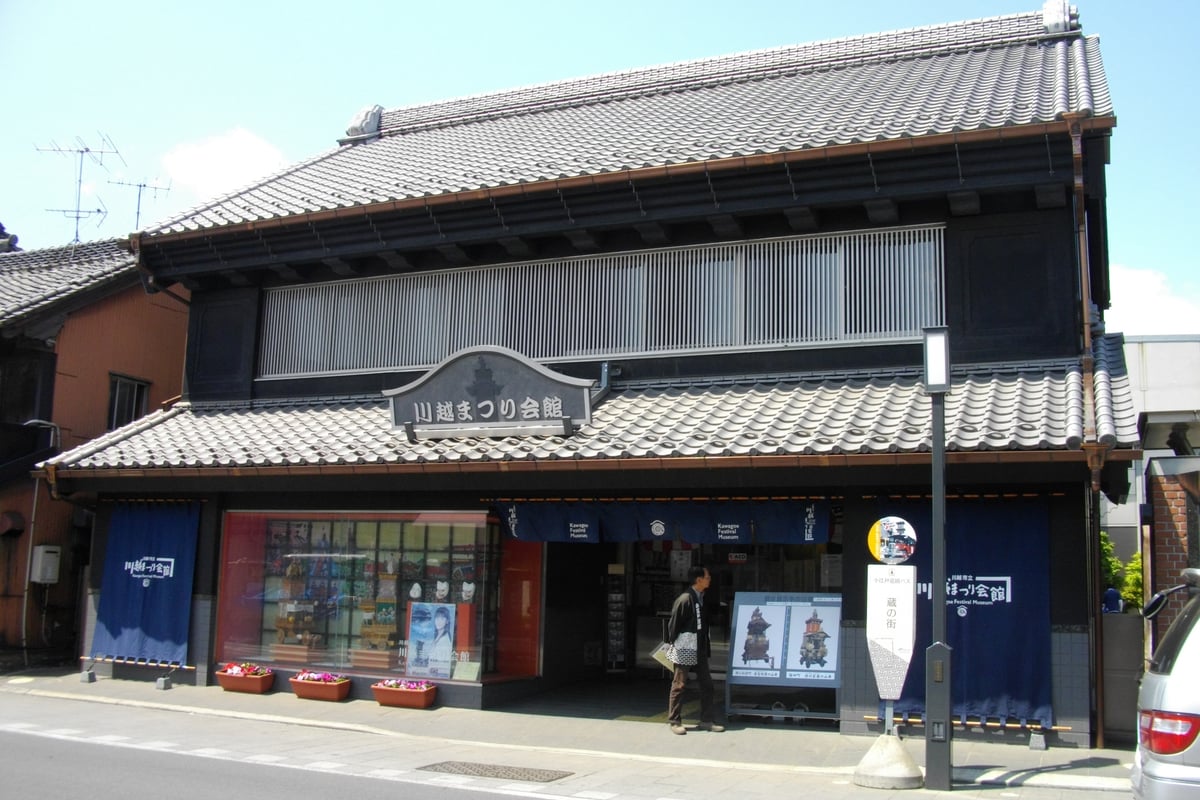
A museum where you can experience the "Kawagoe Hikawa Festival Float Event" (Kawagoe Matsuri) — designated a National Important Intangible Folk Cultural Property — year-round. Two of the festival's magnificent floats are on permanent display inside, letting visitors get an up-close look at their intricate carvings and dolls, as well as the two-tiered structure unique to Kawagoe-style Edo floats. The museum also features video screenings of the festival music and displays introducing generations of float dolls and the festival culture of Little Edo Kawagoe, so even if you can't make it to the main festival in October, you can still experience the excitement and history of the Kawagoe Matsuri. Conveniently located for a stop along an Ichibangai stroll, it's recommended for anyone who wants to learn more about Kawagoe's festival culture. The museum also has a display corner for the costumes and tools used in the festival, letting visitors relive the excitement of the actual festival day through photos and video. Even travelers who can't time their visit to the October festival can spend a whole year learning about the power and history of the Kawagoe Matsuri at this valuable venue.
🚶 14 min walk from Hon-Kawagoe Station

Kawagoe Scala-za
川越スカラ座
A working cinema nestled in Motomachi, near Ichibangai. Its predecessor was the "Ichirikitei" variety theater, founded in 1905 (Meiji 38), which remained at the heart of the entertainment district through several name changes—"Oide-kan" and "Kawagoe Engei-kan"—before being rebuilt as the first-run cinema "Kawagoe Shochiku-kan" in 1940 and renamed to its current name, "Kawagoe Scala-za," in 1963. The current building dates from 1986 (Showa 61) and conveys a Showa-era retro atmosphere quite different from the town's storehouse streetscape. In 2007, the theater faced closure when its owner retired, but the nonprofit organization Playground, formed by local volunteers determined to keep the city's last remaining cinema alive, took over its operation, drawing on crowdfunding to relaunch it. Screening a wide range of films from independent releases to acclaimed mini-theater titles, it is beloved by locals and visitors alike as a uniquely Koedo movie-going experience to enjoy between strolls through the storehouse streets.
🚶 15 min walk from Hon-Kawagoe Station
Taisho Roman Yume-dori Street
大正浪漫夢通り
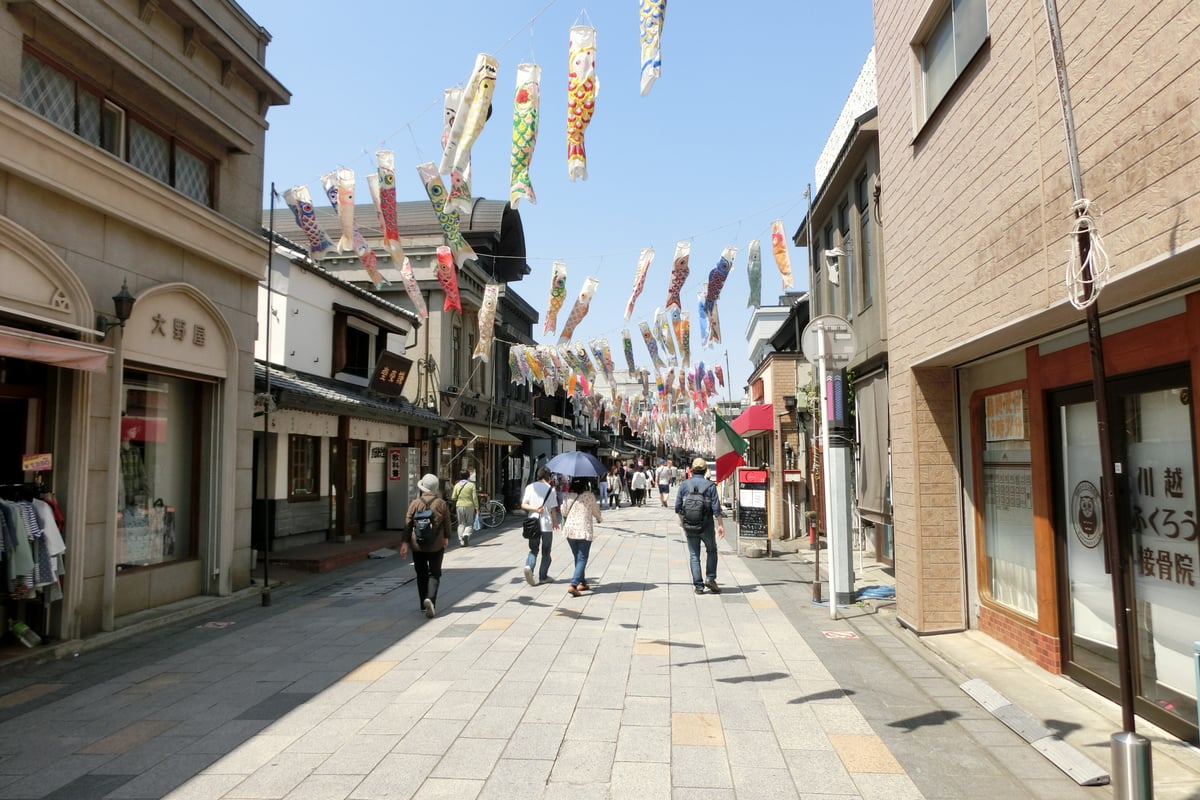
A shopping street stretching between Ichibangai, known for its storehouse townscape, and Hon-Kawagoe Station, retaining the atmosphere of the Taisho era. Once known as "Ginza-dori," this commercial district is lined with retro signboard architecture and Western-style buildings from the Taisho and early Showa periods, and the stone-paved road adds to its nostalgic mood. Long-established Japanese confectionery shops, cafes, general stores, and kimono rental shops line the street, making it a pleasant place for a leisurely stroll while snacking and shopping. At the street's south end stands the Western-style former Bushu Bank Kawagoe Branch (now the Kawagoe Chamber of Commerce and Industry), notable for its striking Doric columns reminiscent of ancient Greece, which has become a symbol of the street. Offering a different flavor of nostalgia from the imposing storehouses of Ichibangai, it is a popular strolling spot with both tourists and locals for its Taisho-era romantic charm.
🚶 10 min walk from Hon-Kawagoe Station
Kasho Uemon Main Store
菓匠右門 本店
Founded in 1957, this is one of Kawagoe's leading Japanese confectionery shops. Its signature "Imokoi," created alongside the shop's 1996 relaunch, is an original sweet made by wrapping sliced sweet potato and sweet red bean paste in a dough made from mountain yam and glutinous rice flour; it has become nationally famous as a byword for Kawagoe souvenirs. Each one is handmade, and it has been certified as a "Sai-no-Kuni Certified Quality Brand Product" by Saitama Prefecture. The main store, opened in 2024, is a directly operated shop with ample parking on the factory grounds, where freshly made sweet-potato treats such as Imokoi and Imopote line the shelves—enjoying them warm is a pleasure unique to the main store. The attached tea room also offers meals such as sweet-potato rice. This shop embodies the appeal of Kawagoe sweet potatoes—long praised since the Edo period as "sweeter than roasted chestnuts, at thirteen ri"—in the form of confectionery.
🚶 25 min walk from Hon-Kawagoe Station
Koedo Osatsuan
小江戸おさつ庵
A sweet-potato confectionery specialty shop located in Saiwai-cho, close to the Bell Tower of Time and Ichibangai. Its signature product, "Osatsu Chips," is a snack for eating while strolling made by thinly slicing sweet potatoes—including those grown in Kawagoe—and frying them; its simple flavor, which makes the most of the ingredient's natural sweetness, has won it many fans. Served fresh from the fryer in a paper cup, its convenience for casual snacking while walking through the storehouse townscape is one reason tourists love it. The shop also offers seasonal items such as the limited-quantity "Premium Chips," and lines often form on weekends. Within walking distance of both the Bell Tower of Time and Ichibangai, and close to a Koedo Loop Bus stop, it has become a go-to spot for a snack break during a stroll around Kawagoe.
🚶 13 min walk from Hon-Kawagoe Station
Kitain Temple
喜多院
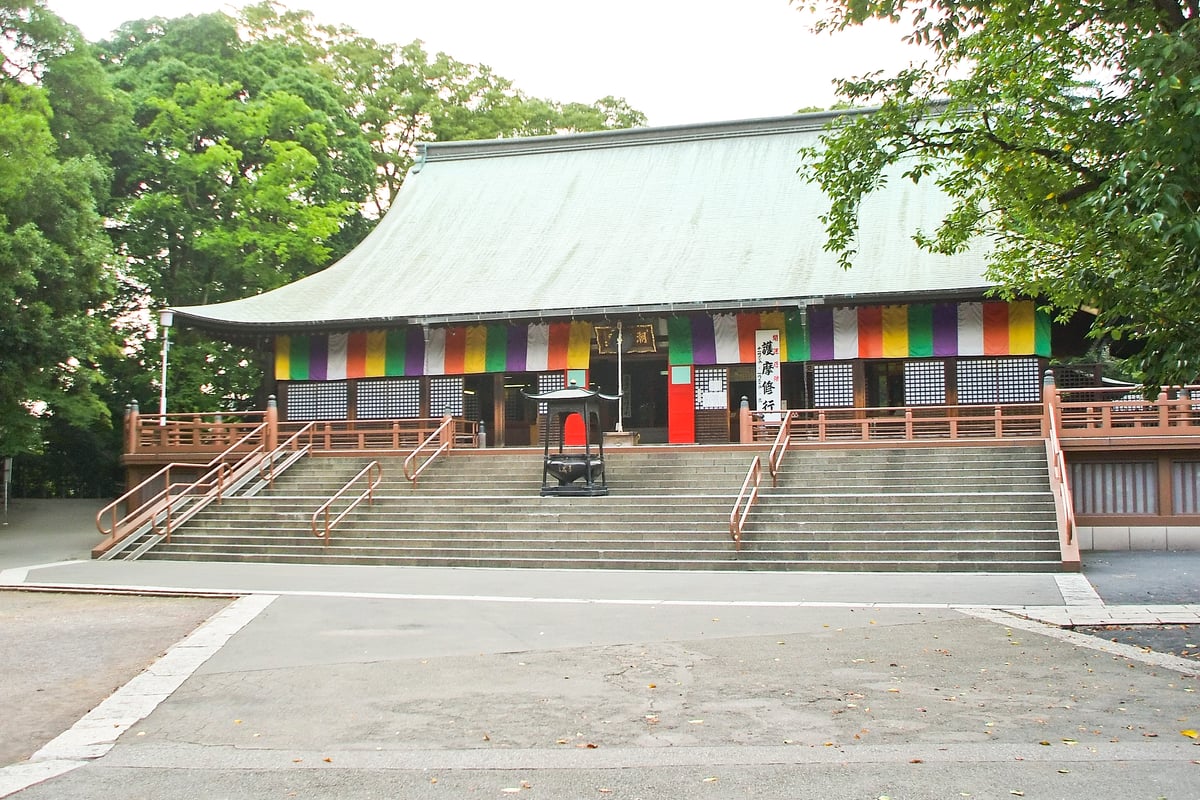
An ancient temple said to have been founded in 830 by the eminent Tendai priest Ennin (Jikaku Daishi), affectionately known as "Kawagoe Daishi." During the Edo period it received deep patronage from the Tokugawa family and flourished under the chief priest Tenkai, a close advisor to the third shogun, Iemitsu. When many of its halls were destroyed in the great Kawagoe fire of 1638, buildings from Edo Castle were reportedly relocated here on Iemitsu's orders; its guest hall and study still contain the room said to be Iemitsu's birthplace and the room used by Lady Kasuga for her toilette, and many of the surviving buildings are designated Important Cultural Properties of Japan. The 538 stone Buddhist statues known as the "Gohyaku Rakan" (Five Hundred Arhats), lined up at the back of the grounds, were dedicated over about 50 years starting in 1782 and are counted among Japan's three great collections of rakan statues; the sight of each statue with its own distinct expression—laughing, crying, and more—is a famous highlight. The Momijiyama Garden also holds a weeping cherry tree said to have been planted by Iemitsu himself, and this is one of Kawagoe's leading temples, drawing worshippers year-round.
🚶 25 min walk from Kawagoe Station
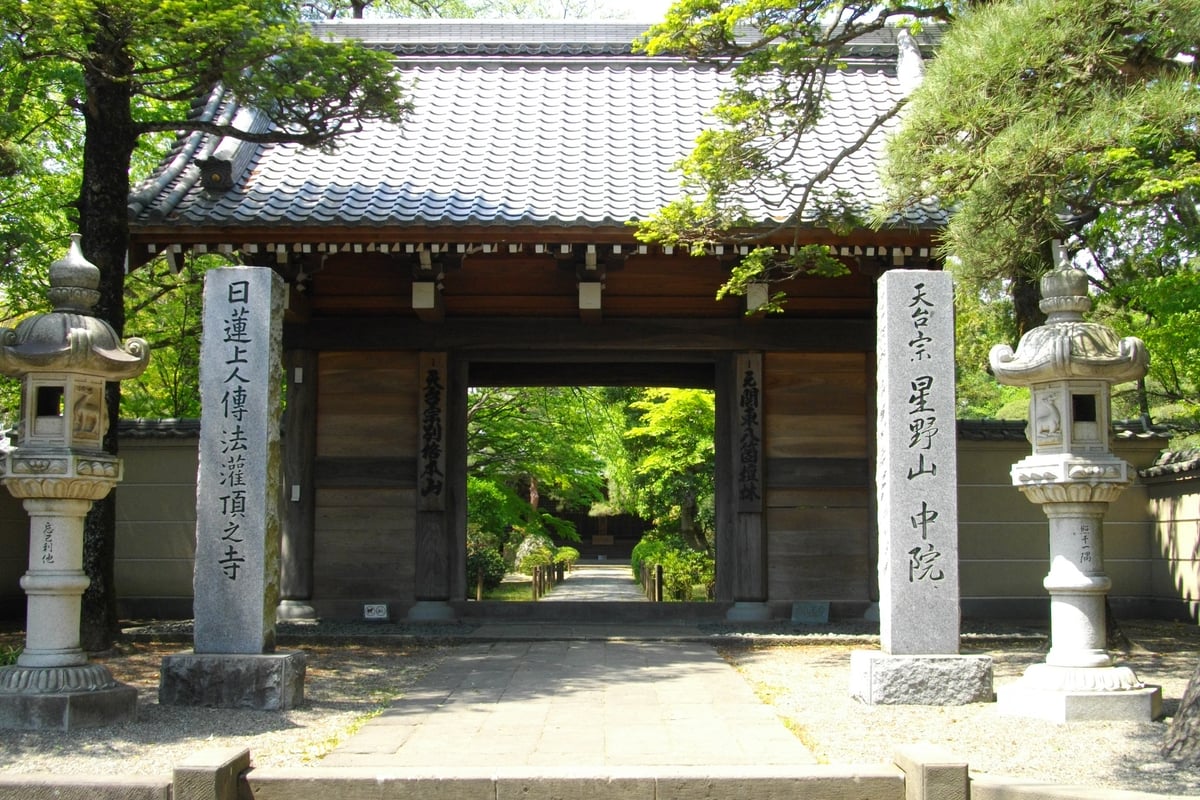
Chuin Temple
中院
Located just south of Kitain, this is a Tendai sect betsukaku honzan (special head temple), formally named "Seizan Muryoju-ji Chuin." Like Kitain, it is said to have been founded by Ennin (Jikaku Daishi), and it was once known, along with Kitain and Nanin, as one of the "Three Temples of Kawagoe." Compared to the bustling, worshipper-filled Kitain, it retains a quiet atmosphere and is cherished locally as a spot famous for the weeping cherry trees blooming in front of its main hall. On the grounds stands "Fusentei," a tea room associated with the novelist Shimazaki Toson; it was a gift from Toson to his mother-in-law, Kato Miki, and the "Fusen Monument," inscribed in Toson's own hand, still remains today. The temple is also known as the "Birthplace of Sayama Tea," said to be the place from which Sayama tea spread during the Edo period, and a monument to tea stands on the grounds. The Japanese garden, which changes expression with the seasons, is another highlight, and touring it together with Kitain has become a popular worship route.
🚶 12 min walk from Hon-Kawagoe Station
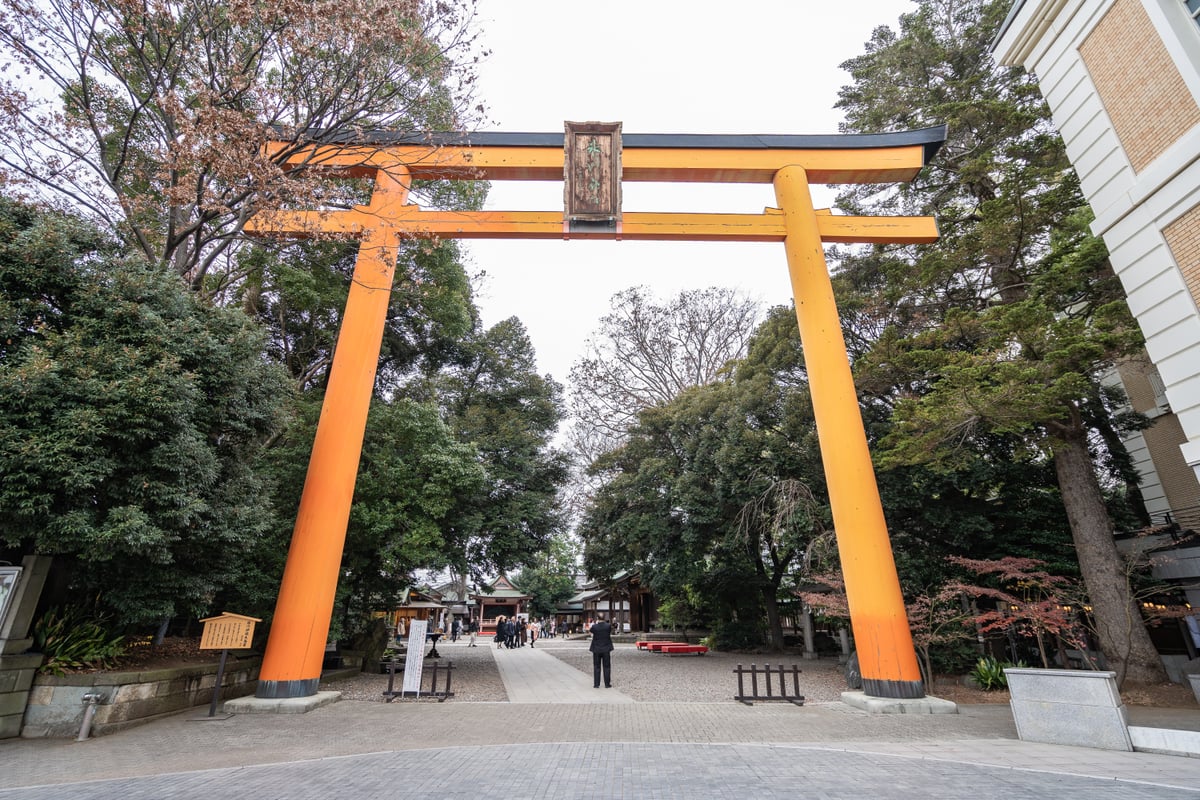
Kawagoe Hikawa Shrine
川越氷川神社
A shrine beloved as the guardian deity of all Kawagoe, known for match-making blessings. Its five enshrined deities are led by the divine couple Susanoo-no-Mikoto and Kushinadahime-no-Mikoto, and the shrine is known for blessings of family harmony and good relationships. Within the grounds stands the towering 'Meoto Kusu' (married camphor trees), a symbol of marital harmony, and it is said that walking around its base grants wishes. Each morning, a limited number of 'Enmusubi Tama' (matchmaking charms) are distributed on a first-come, first-served basis; floating one in water to reveal its pattern is said to make a wish come true, and because supplies are limited, long lines form from early morning. In summer, about 2,000 Edo furin (wind chimes) decorate the grounds during the 'Enmusubi Furin' event, creating a fantastical scene with a tunnel of wind chimes and lights reflected in a small stream. The shrine's annual festival is said to be the origin of Kawagoe's signature event, the Kawagoe Matsuri, in which gorgeously decorated floats parade through the city in October. Visited by people of all generations seeking everything from romantic success to family harmony, it is one of Kawagoe's foremost power spots.
🚶 24 min walk from Hon-Kawagoe Station
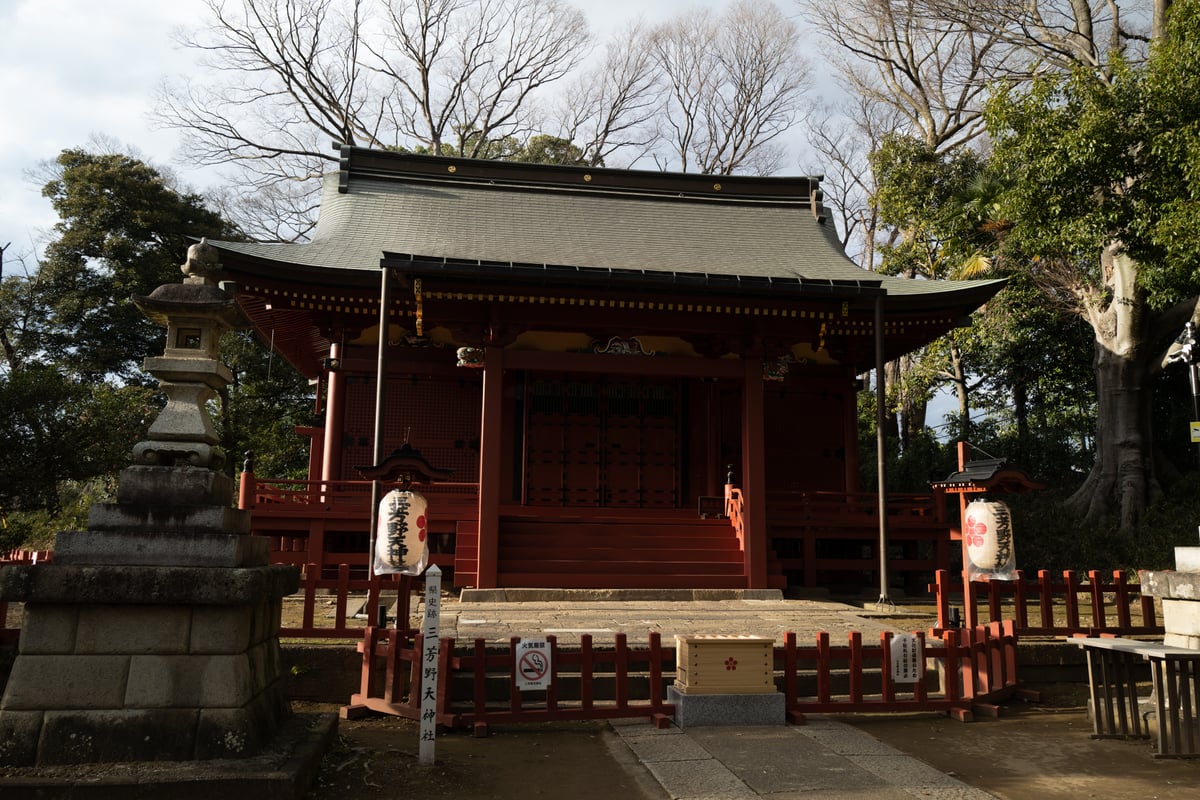
Miyoshino Shrine
三芳野神社
The guardian shrine of Kawagoe Castle, standing quietly amid trees right next to the Honmaru Goten (main citadel palace) of Kawagoe Castle. In addition to Susanoo-no-Mikoto and Kushinadahime-no-Mikoto, it enshrines Sugawara no Michizane, and is said to have been rebuilt in 1624 (Kan'ei 1) by Sakai Tadakatsu, lord of the Kawagoe domain. There is a theory that the approach to this shrine was the setting for the children's song 'Toryanse,' making it known as the song's birthplace. Because it once stood within the castle grounds, general worship was difficult, and it is said that visitors had to pass along the narrow approach while being wary of the castle's patrolling guards—a memory said to remain in the lyric 'going is fine, but coming back is scary.' Since it enshrines Sugawara no Michizane, it is also called the 'Tenjin-sama of the Castle,' and is visited by students hoping for success in their studies. Though modest in size, it is a valuable historic site conveying both the history of Kawagoe Castle and the culture of Japanese children's songs to this day.
🚶 25 min walk from Hon-Kawagoe Station
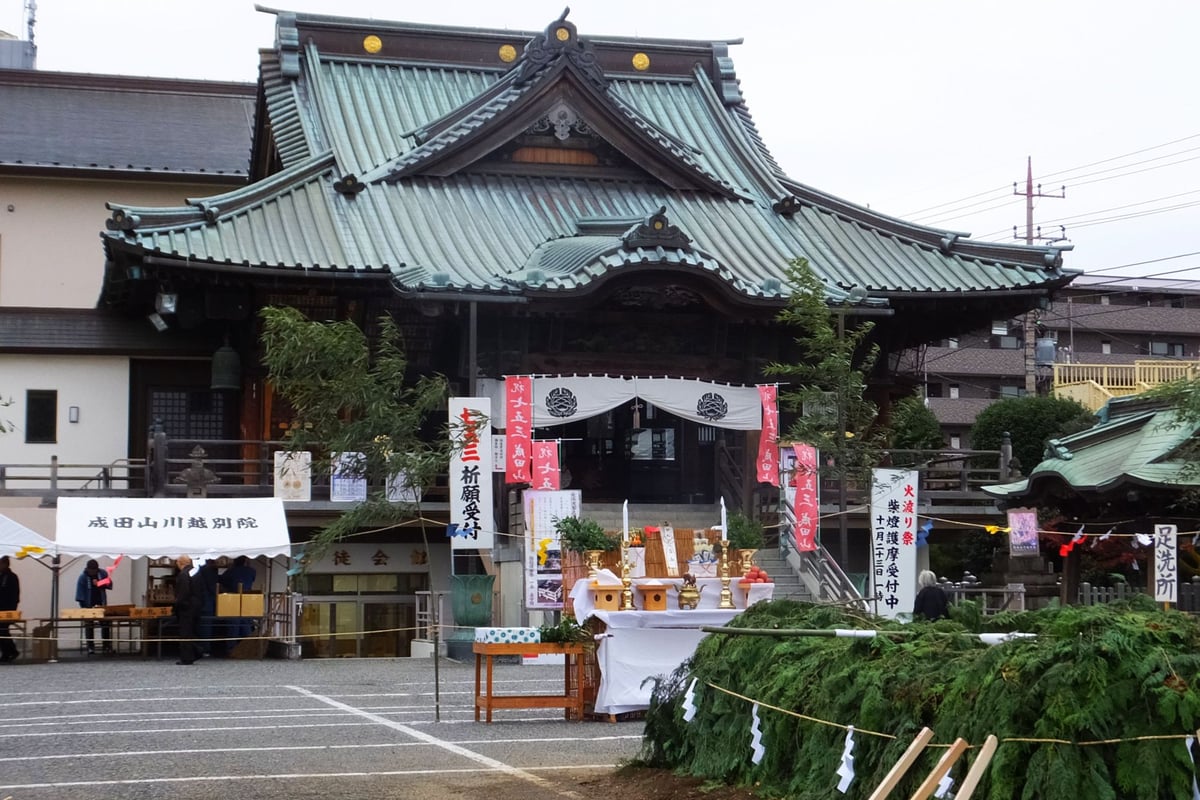
Naritasan Kawagoe Betsuin
成田山川越別院
A temple of the Shingon Chizan sect known as the first branch temple (betsuin) of Naritasan Shinshoji Temple. Its principal image is Fudo Myoo (Acala), and it is affectionately known locally as 'Kawagoe's Fudo-sama' or 'Kawagoe Fudo.' It began when Ishikawa Shoon, who lost sight in both eyes yet is said to have regained his vision through devout faith in Fudo Myoo and training at Naritasan, revived the then-abandoned Hongyo-in temple in 1853 (Kaei 6). In 1877 (Meiji 10) it came to be called Naritasan Kawagoe Betsuin, and has since developed as one of the leading centers of Naritasan worship in the Kanto region. On the 28th of each month, an antique flea market is held on the temple grounds, drawing large crowds of bargain hunters that spill from the grounds into the surrounding lanes. In November, the 'Hiwatari Matsuri' (fire-walking festival, a Saito Goma ritual) is held, in which participants walk barefoot across the embers of a sacred fire to pray for good health, a beloved autumn tradition in Kawagoe. Within walking distance of the Kurazukuri (warehouse-style) townscape, it is also popular with visitors stopping by during a stroll through the town.
🚶 13 min walk from Hon-Kawagoe Station
Renkeiji Temple
蓮馨寺
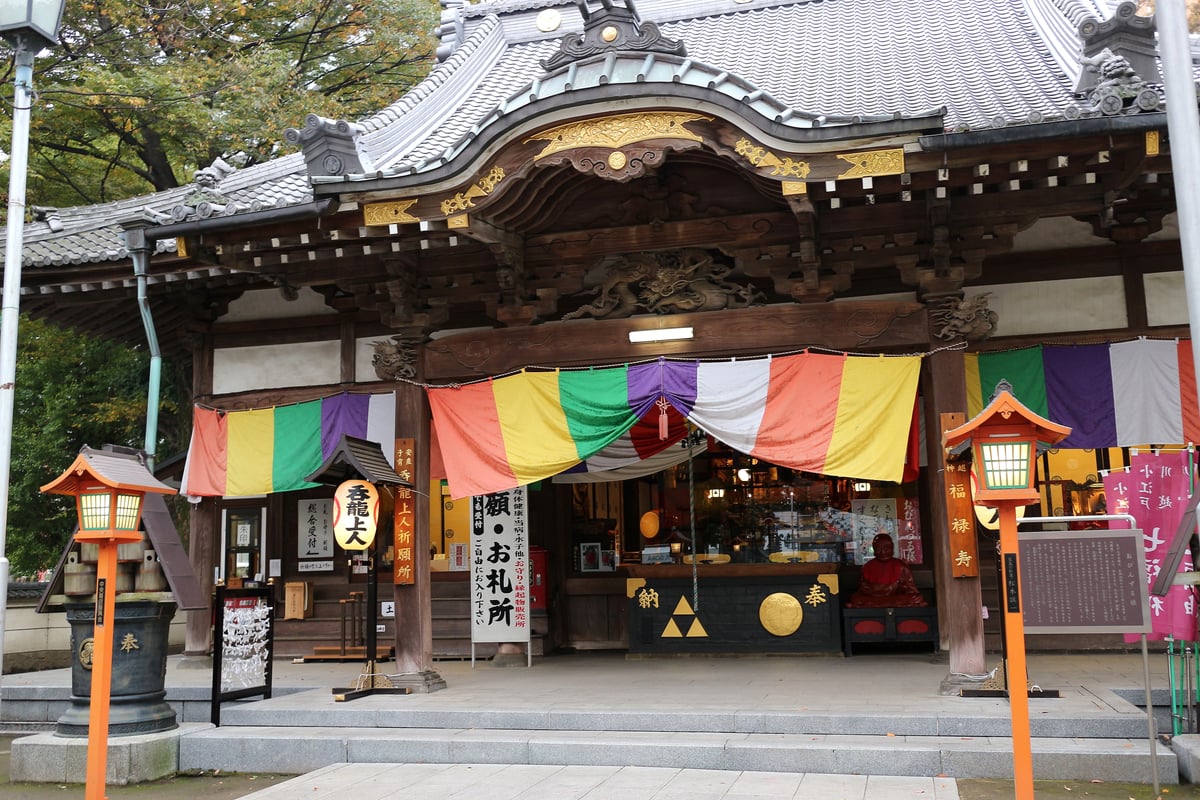
One of the leading old temples of Koedo Kawagoe, ranked alongside Kitain, also affectionately known as 'Kawagoe Daishi.' A Jodo sect temple said to have been founded in 1549 (Tenbun 18) by Daidoji Masashige, lord of Kawagoe Castle, to pray for the repose of his late mother Renkei-ni. Its founding priest, Sonjo Shonin, later became the 10th head priest of Zojoji, the great head temple of the Jodo sect, and in the era of his disciple Sono Shonin, successive generations of the Tokugawa shogunal family, beginning with Tokugawa Ieyasu, became devoted followers. During the Edo period it was counted among the 'Eighteen Danrin of Kanto,' training institutions for Jodo sect priests, and as a prestigious temple permitted to use the Tokugawa hollyhock crest, it trained many scholar-monks. The 'Obinzuru-sama' statue on the grounds is said to cure the corresponding part of the body when rubbed, and its wood grain has been polished smooth by years of touching. On the 8th of each month, 'Donryu Day' brings stalls loved by locals. Its location right near the Kurazukuri townscape and Ichibangai shopping street makes it an easy stop during a stroll through town.
🚶 5 min walk from Hon-Kawagoe Station
Kawagoe Kumano Shrine
熊野神社(川越)
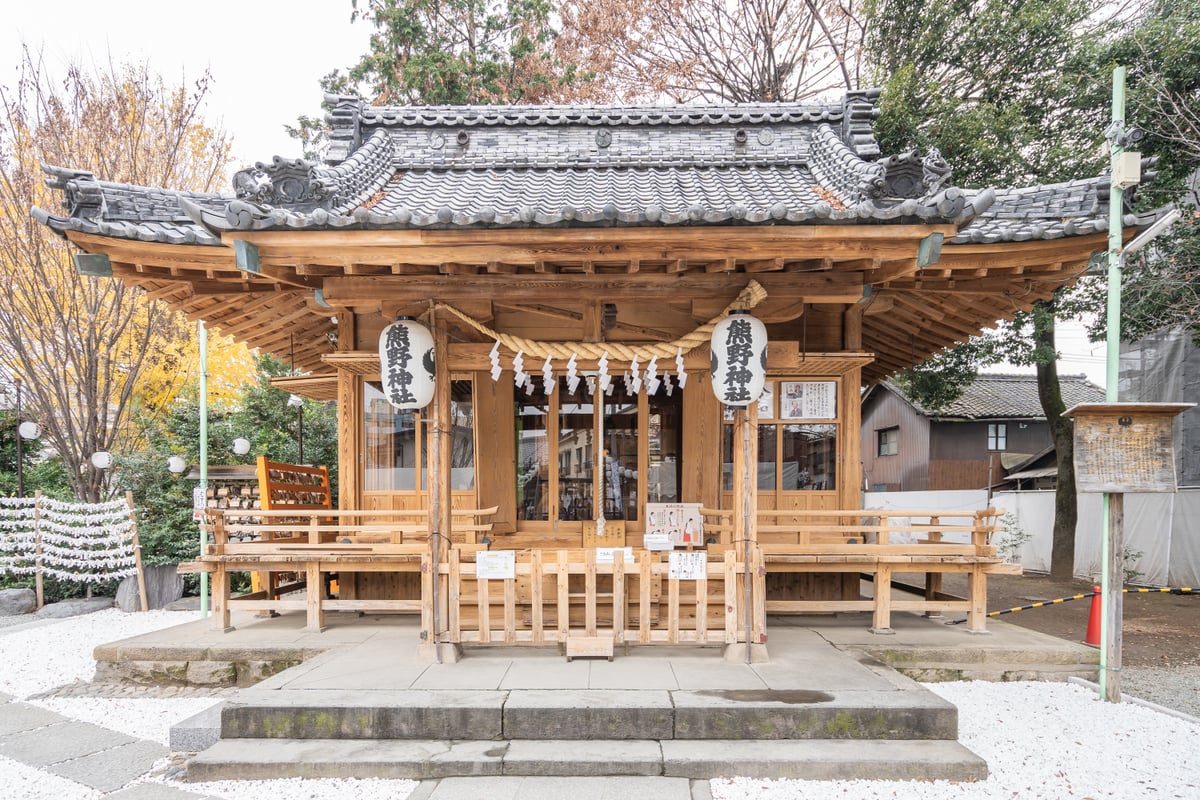
A shrine cherished for match-making, good fortune, and warding off misfortune, located just next to Renkeiji Temple. It is said to have begun in 1590 (Tensho 18) when Nen'yo Bunno Sojo, the second head priest of the neighboring Renkeiji, invited a divided spirit from Kumano Hongu Taisha in the Kishu region. The enshrined deities include Izanagi-no-Mikoto and Izanami-no-Mikoto along with four other Kumano deities, and in 1713 (Shotoku 3) the main hall was rebuilt and the torii gate was rebuilt in stone. The shrine offers a range of unique, hands-on attractions throughout its grounds, including charms related to the three-legged crow (Yatagarasu), a 'Healthy Footpath' where visitors walk barefoot over small stones to pray for health, ring-toss for fortune-telling, the 'Petting Snake' statue said to bring blessings when rubbed, and a coin-washing Benzaiten shrine, making it popular among younger visitors seeking goshuin (shrine seal) collecting and matchmaking prayers. Its convenient location, easy to combine with a visit to Ichibangai and Renkeiji, is also part of its appeal.
🚶 7 min walk from Hon-Kawagoe Station
Kawagoe Castle Honmaru Goten
川越城本丸御殿
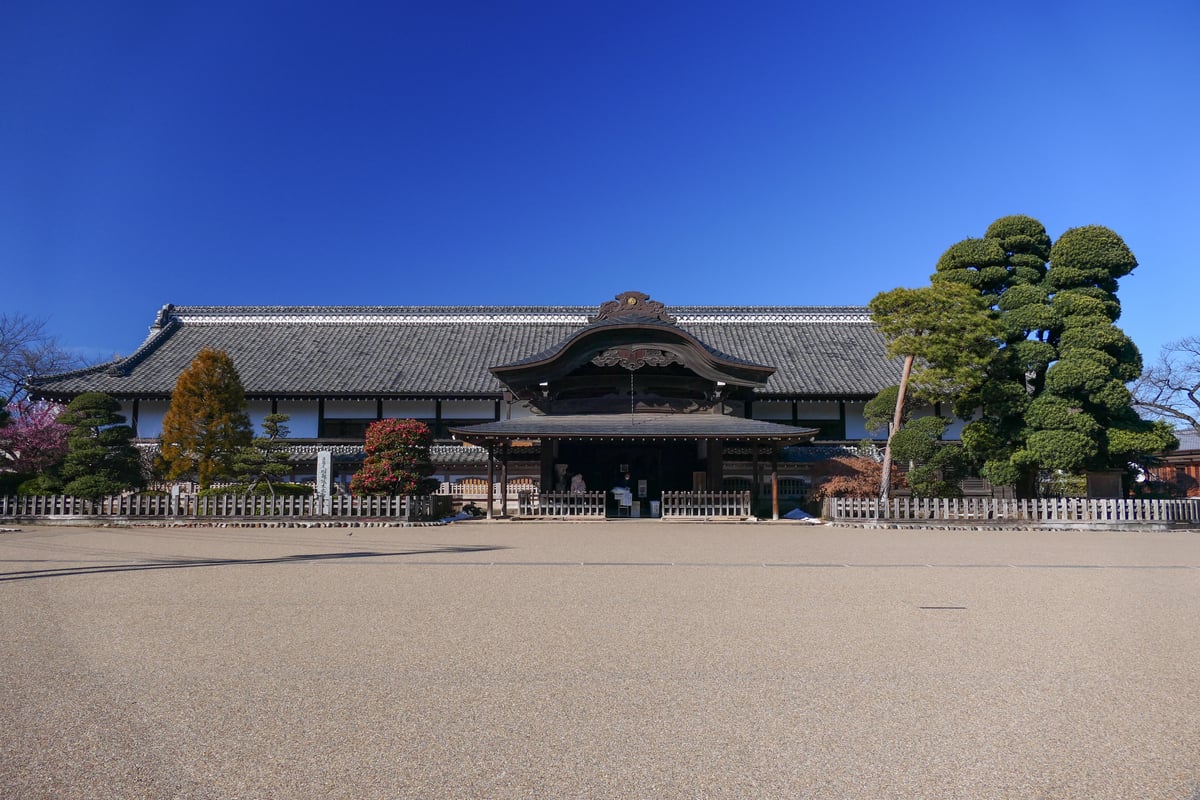
A remnant of Kawagoe Castle, which served as the seat of the Kawagoe domain government during the Edo period; the surviving Honmaru Goten (main citadel palace) is an extremely rare structure, with only this one and Kochi Castle's remaining in all of Japan. Kawagoe Castle was first built in 1457 (Choroku 1) by the father-and-son pair Ota Doshin and Dokan, and flourished during the Edo period as the seat of the 170,000-koku Kawagoe domain. The surviving Honmaru Goten was constructed in 1848 (Kaei 1) by domain lord Matsudaira Naritsune, and originally comprised as many as 16 buildings including the entrance hall and great hall. The entrance hall, great hall, and Karo Tsumesho (chief retainers' waiting room) survive to this day, with the tatami-floored great hall featuring design elements showing the dignity of the domain lord. The Karo Tsumesho was dismantled in the early Meiji era and relocated to a merchant house in Fukuoka Prefecture, before being brought back to Kawagoe in 1988 and reconstructed at its current location adjacent to the Honmaru Goten. As a valuable historic site conveying the appearance of Edo-period samurai architecture to this day, it is managed and open to the public by the Kawagoe City Museum.
🚶 25 min walk from Hon-Kawagoe Station
Fujimi Yagura Ato (Former Watchtower Site of Kawagoe Castle)
富士見櫓跡
Kawagoe Castle never had a keep; instead, the three-story Fujimi Yagura (Fuji-View Turret), built on the castle's highest ground, served in its place. Although the building itself no longer survives, the site remains preserved as a mounded, earthwork-like rise on the south side of Saitama Prefectural Kawagoe High School, and visitors are free to walk up and imagine the turret as it once stood. Near the summit stand small shrines — Ontake Jinja, Sengen Jinja, and Fujimi Inari — making the spot a popular destination for history walks tracing the remains of Kawagoe Castle. According to a late-Edo-period survey, the turret measured about 15 meters long and 14 meters wide, and from the highest point in the castle town it served as a watchtower. As its name suggests, it is said to have once offered a view all the way to Mount Fuji, though trees and surrounding buildings now block that vista. Admission is free with no time restrictions, and together with the Kawagoe Castle Honmaru Goten Palace and the Kawagoe City Museum, it's a worthwhile stop for experiencing the history of the old castle town beyond the kurazukuri streetscape.
🚶 8 min walk from Kawagoe Station / Hon-Kawagoe Station
Kawagoe City Art Museum
川越市立美術館
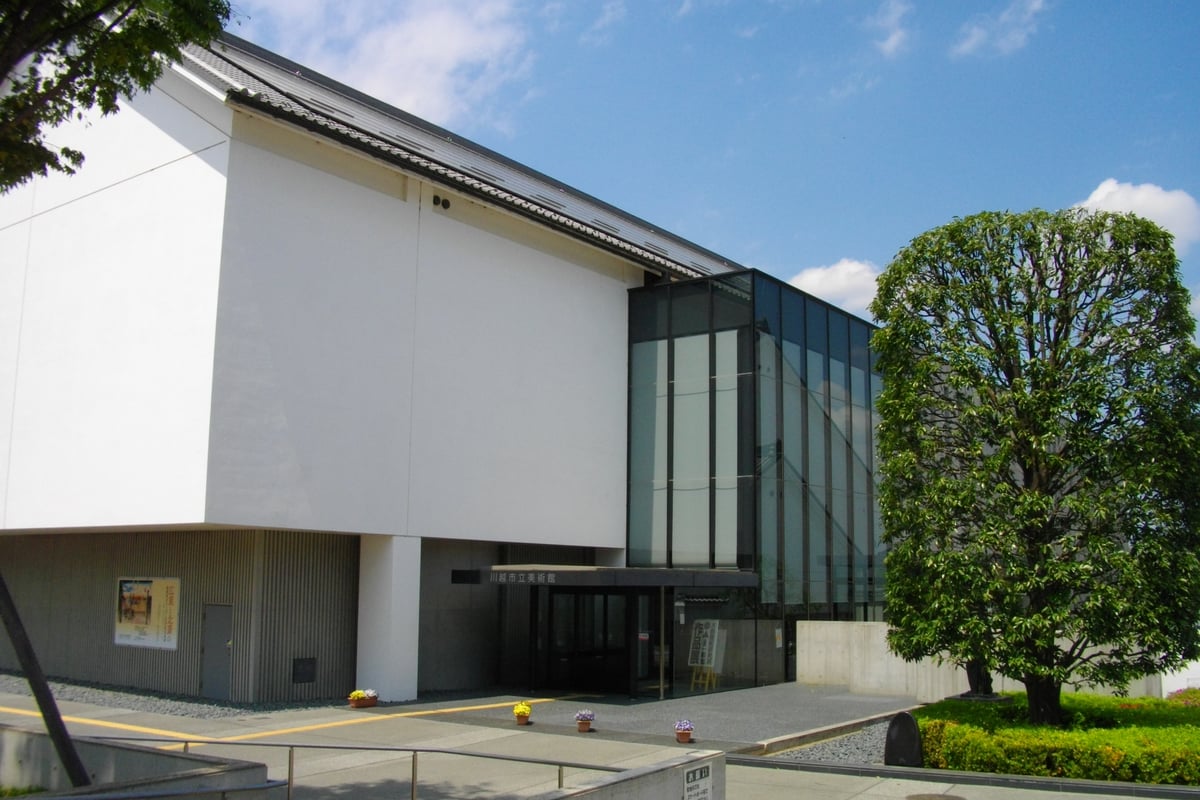
An art museum adjoining the Kawagoe Castle Honmaru Goten Palace, holding a collection of about 2,000 works centered on artists connected to Kawagoe. Its permanent exhibition introduces the paintings, calligraphy, and craftwork of Aihara Kyuichiro, a leading figure in the modern Japanese-painting world, along with other artists born or based in Kawagoe, while several special exhibitions on varied themes covering Japanese and international art are held each year. The museum also has a "creation room" where visitors can try hands-on art activities while enjoying the exhibits, designed to let both adults and children engage with art casually. The galleries are spacious and relaxed, making it a good choice for anyone wanting to escape the crowds of Ichibangai and view art quietly. Together with the Kawagoe Castle ruins and the City Museum, it's a popular spot for experiencing a side of Kawagoe's culture different from the kurazukuri streetscape — if you have time, visiting all three is recommended.
🚶 5 min walk from Kawagoe Station
Kawagoe City Museum
川越市立博物館
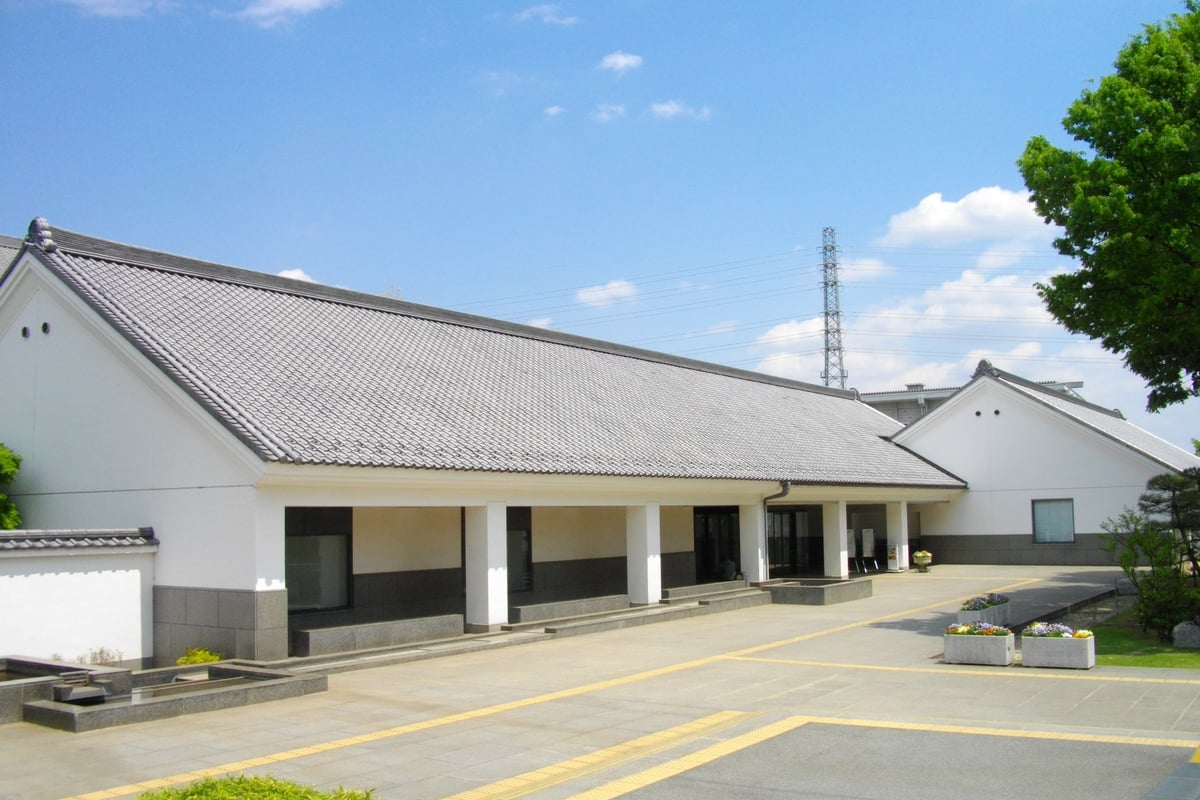
A history museum standing right next to the Kawagoe Castle Honmaru Goten Palace, offering a comprehensive introduction to Kawagoe's history and culture — from the castle's construction and the growth of its castle town, through the Great Kawagoe Fire of 1893 (Meiji 26) that shaped the kurazukuri streetscape, to the float culture of the Kawagoe Festival. With many visually engaging exhibits, including full-scale festival float models, a model of the old castle town, and a corner explaining how Ota Dokan and the Ogigayatsu Uesugi clan came to build Kawagoe Castle, a visit here before walking the kurazukuri streets deepens your understanding considerably. The special exhibition room also hosts a variety of themed exhibitions covering archaeological materials, historical documents, and art and craft objects, making it a must-visit for anyone interested in Kawagoe's history. Many visitors combine it with the adjoining Honmaru Goten Palace and the City Art Museum.
🚶 10 min walk from Kawagoe Station / Hon-Kawagoe Station
Isanuma Pond
伊佐沼
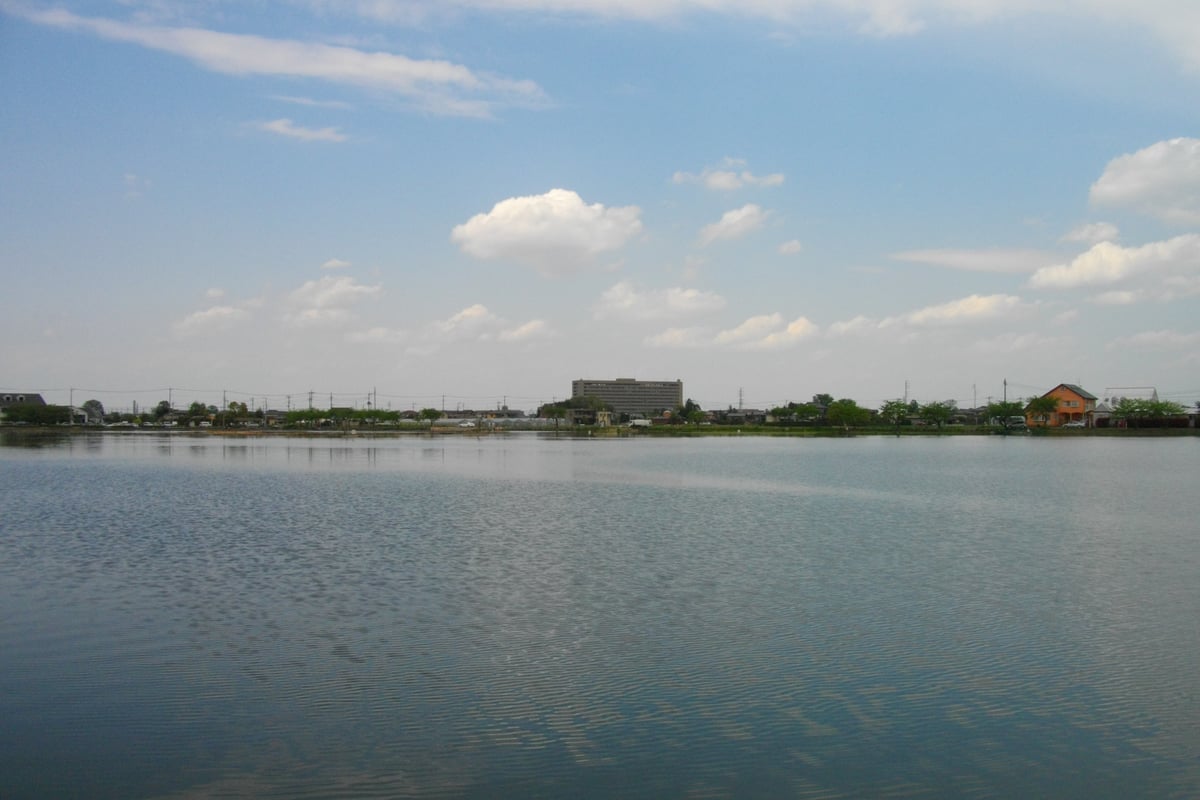
A reservoir pond spreading across the southeastern part of Kawagoe City, with a water surface among the largest of any natural lake or pond in Saitama Prefecture. Once used as an agricultural water source, it is now cherished by Kawagoe residents as a relaxing waterside retreat. Along the west bank, a row of about 230 cherry trees lines the path, drawing crowds every early April to the "Sakura no Michi Hiroba" plaza for the cherry blossom festival, a well-known spot for hanami. About 300 meters along the pond's north shore lies a colony of ancient lotus, and in summer visitors can view the lotus blossoms up close from a wooden boardwalk. Cosmos in autumn and sunflowers in summer offer floral scenery through the seasons, and the area is also known as a nature spot where ducks, herons, and other waterbirds gather. For those wanting to escape the bustle of the kurazukuri streetscape and enjoy Kawagoe's rustic, satoyama-like scenery at a relaxed pace, this area is highly recommended, and renting a bicycle is a convenient way to explore the loop course.
🚶 5 min walk from Hon-Kawagoe Station
Kawagoe Suijo Park (Kawagoe Aquatic Park)
川越水上公園
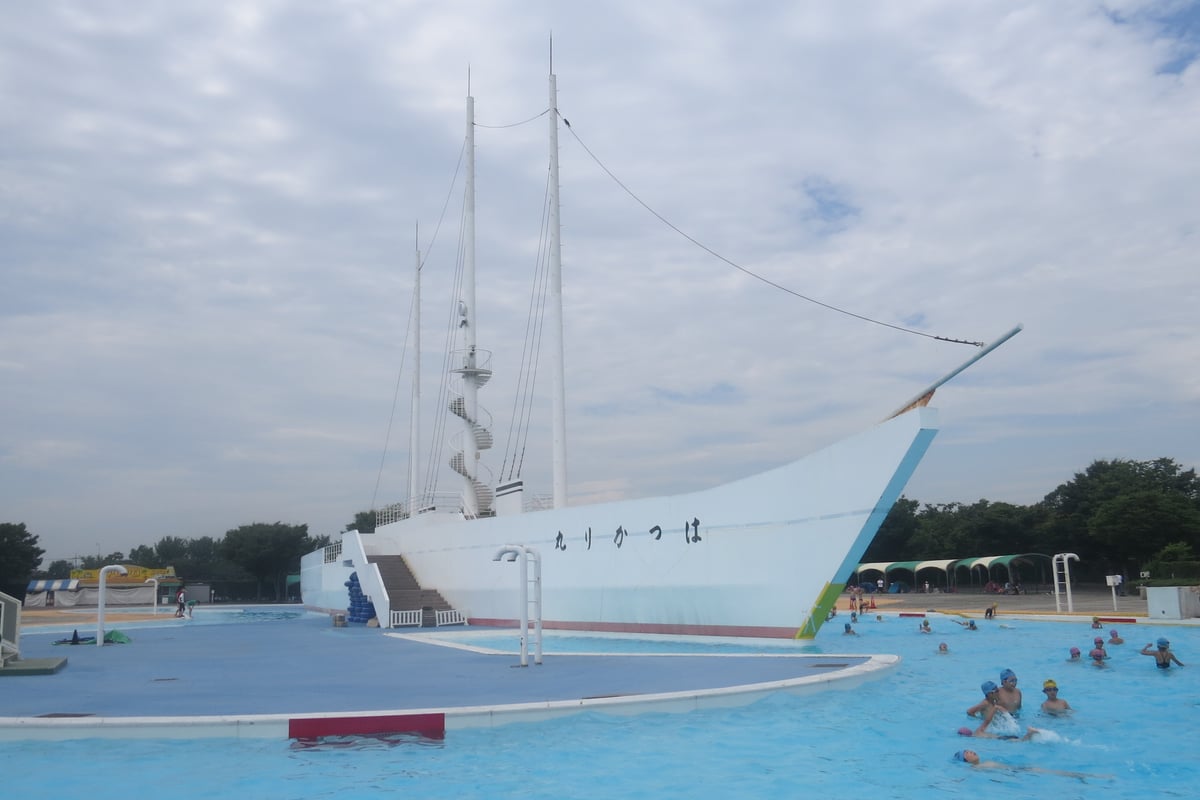
A prefectural park located about 2km west of central Kawagoe, on the right bank of the Iruma River. During summer (typically early July through early September), a large pool complex opens featuring a roughly 300m lazy river, the "Aqua Snake Slider" water slide with a 15m drop, a wave pool, and more, making it one of the most popular family leisure spots in the prefecture. Outside pool season, the park offers year-round facilities including tennis courts, a futsal court, a boating pond, and a lawn plaza, making it a beloved retreat for local residents. Through a naming-rights sponsorship, it's also known by the nickname "Hot Staff Kawagoe Park." Tickets must currently be purchased in advance, so anyone planning to use the pool should check the official website beforehand. Recommended for anyone wanting to spend an active day surrounded by greenery and water, in contrast to the kurazukuri streetscape.
🚶 15 min walk from Nishi-Kawagoe Station
Toyama Memorial Museum
遠山記念館
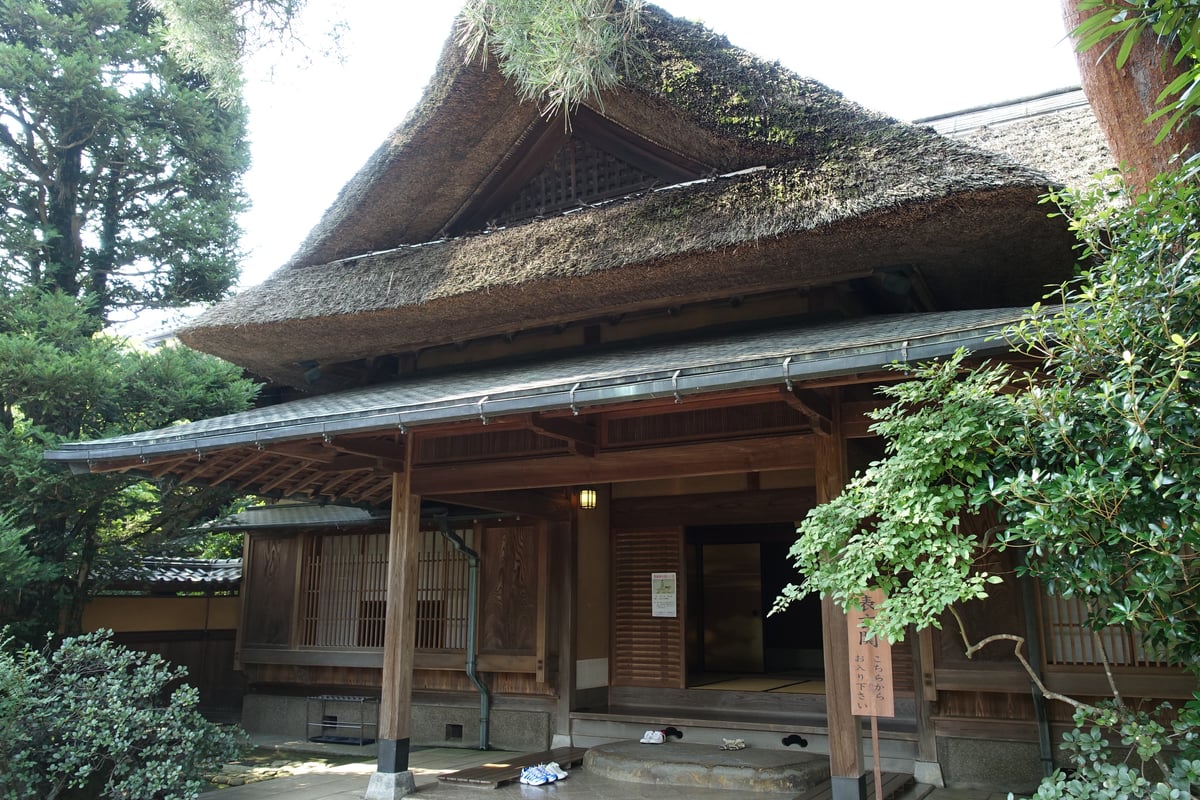
A museum open to the public in the former residence built in the early Showa era by Toyama Genichi, founder of Nikko Securities (now SMBC Nikko Securities), for his mother who lived in his home village. The main residence, built in the sukiya-zukuri style, consists of three wings — the Central, East, and West Wings — and was designated a National Important Cultural Property in 2018. Visitors can view reception rooms and transoms crafted with the finest workmanship of leading artisans of the era, along with gardens that change expression through the seasons. The adjoining museum building displays a rotating selection from the roughly 11,000-piece collection amassed by Toyama Genichi over his lifetime, including Japanese and Chinese paintings, ceramics, textiles, Noh masks and dolls, and archaeological materials from the ancient Middle East and the Andes. Located in Kawajima, Hiki District, a bit removed from central Kawagoe, it remains a beloved hidden gem where visitors can quietly savor the pinnacle of modern Japanese-style architecture, offering an experience quite different from the kurazukuri streetscape.
🚶 15 min walk from Kawagoe Station
