Kitain Temple
喜多院
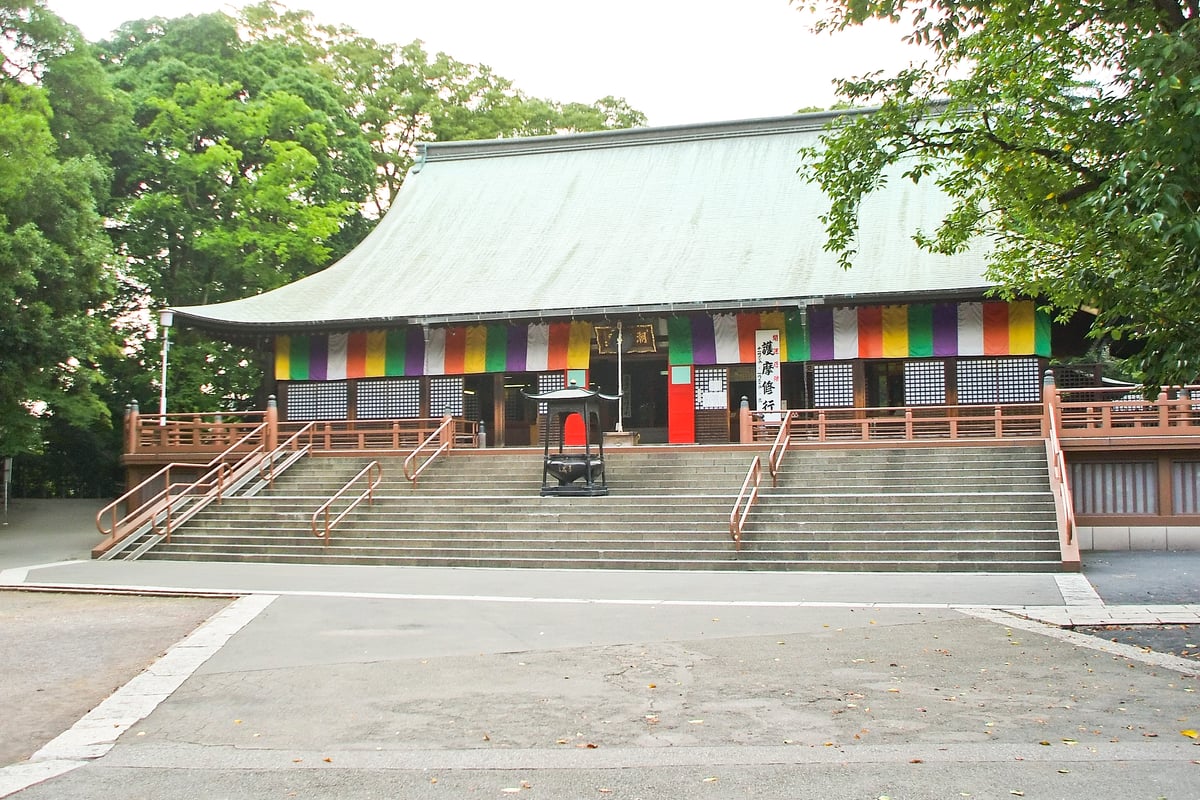
An ancient temple said to have been founded in 830 by the eminent Tendai priest Ennin (Jikaku Daishi), affectionately known as "Kawagoe Daishi." During the Edo period it received deep patronage from the Tokugawa family and flourished under the chief priest Tenkai, a close advisor to the third shogun, Iemitsu. When many of its halls were destroyed in the great Kawagoe fire of 1638, buildings from Edo Castle were reportedly relocated here on Iemitsu's orders; its guest hall and study still contain the room said to be Iemitsu's birthplace and the room used by Lady Kasuga for her toilette, and many of the surviving buildings are designated Important Cultural Properties of Japan. The 538 stone Buddhist statues known as the "Gohyaku Rakan" (Five Hundred Arhats), lined up at the back of the grounds, were dedicated over about 50 years starting in 1782 and are counted among Japan's three great collections of rakan statues; the sight of each statue with its own distinct expression—laughing, crying, and more—is a famous highlight. The Momijiyama Garden also holds a weeping cherry tree said to have been planted by Iemitsu himself, and this is one of Kawagoe's leading temples, drawing worshippers year-round.
Highlights
The guest hall and study, said to have been relocated from Edo Castle, still contain the room said to be Tokugawa Iemitsu's birthplace and the room used by Lady Kasuga for her toilette, and are open to the public as Important Cultural Properties designated by the national government. The Gohyaku Rakan at the back of the grounds is a group of 538 stone statues dedicated over about 50 years starting in 1782, and the sight of row upon row of richly expressive rakan—laughing, crying, and more—is spectacular. Momijiyama Garden also holds a weeping cherry tree said to have been planted by Tokugawa Iemitsu himself.
History
An ancient Tendai temple said to have been founded in 830 by Ennin (Jikaku Daishi). In the early Edo period, chief priest Tenkai gained the trust of Tokugawa Ieyasu, Hidetada, and Iemitsu, and the temple flourished, becoming known as "Kawagoe Daishi." Although many halls were lost in the great fire of 1638, buildings from Edo Castle were relocated here on the orders of Shogun Iemitsu, becoming the guest hall and study that survive today.

![[New Trip] スーツケース キャリーケース 拡張機能付き 機内持ち込み 軽量 大型 キャリーバック Sサイズ 40L 2~3泊 アイボリー | 旅行や出張で荷物が増えても安心!マチ幅5cm拡張で容量約20%アップ。耐衝撃ボディ、信頼のYKKファスナー、海外旅行に欠かせないTSAロック、静音ダブルキャスター、多段階調節キャリーバー搭載、S/M/Lの3サイズ展開。](https://m.media-amazon.com/images/I/61mh9ATG7UL._AC_SL1500_.jpg)

Seasonal Highlights
🌸 Spring (Mar-May)
The weeping cherry trees in Momijiyama Garden reach full bloom, drawing many worshippers from around late March.
🍁 Autumn (Sep-Nov)
The maples on the grounds turn color, and the combination of the Gohyaku Rakan statues with autumn foliage becomes a popular photo spot.
Visit Tips
- Suggested duration
- About 60-90 minutes
- Crowd levels
- Crowded during New Year visits, the Shichi-Go-San season, and autumn-foliage weekends
- Best time to visit
- Right after opening in the morning tends to be relatively quiet for visiting
| Address | 1-20-1 Kosenba-cho, Kawagoe-shi, Saitama |
|---|---|
| Hours | Mar 1-Nov 23: weekdays 9:00-16:30, Sundays/holidays 9:00-16:50; Nov 24-end of Feb: weekdays 9:00-16:00, Sundays/holidays 9:00-16:20 (last entry 30 minutes before closing) |
| Admission | Adults (high school age and up) ¥400; elementary/junior high school students ¥200 |
| Official Website | Visit official website |
Access
- 25 min walk from Kawagoe Station (JR Kawagoe Line / Tobu Tojo Line (Koedo Loop Bus, get off right at "Kitain-mae"))
- 20 min walk from Hon-Kawagoe Station (Seibu Shinjuku Line (Koedo Loop Bus, get off right at "Kitain-mae"))