Kawagoe Castle Honmaru Goten
川越城本丸御殿
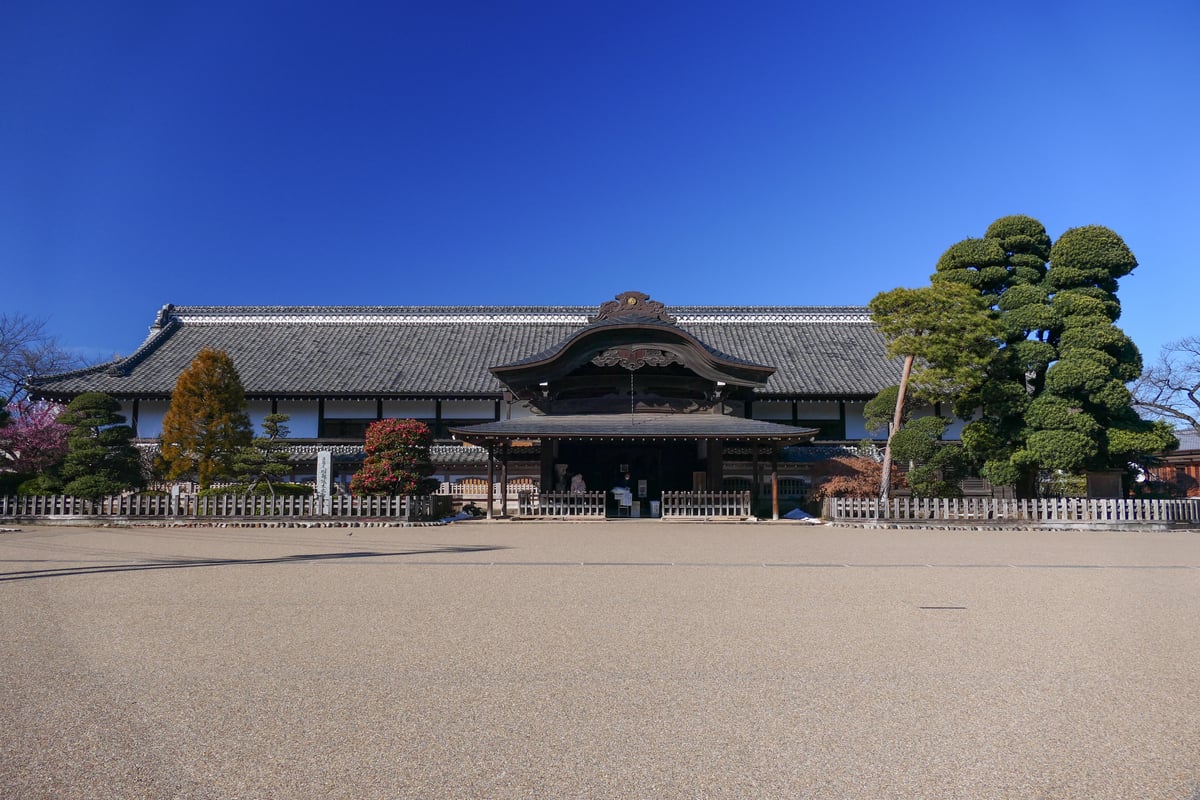
A remnant of Kawagoe Castle, which served as the seat of the Kawagoe domain government during the Edo period; the surviving Honmaru Goten (main citadel palace) is an extremely rare structure, with only this one and Kochi Castle's remaining in all of Japan. Kawagoe Castle was first built in 1457 (Choroku 1) by the father-and-son pair Ota Doshin and Dokan, and flourished during the Edo period as the seat of the 170,000-koku Kawagoe domain. The surviving Honmaru Goten was constructed in 1848 (Kaei 1) by domain lord Matsudaira Naritsune, and originally comprised as many as 16 buildings including the entrance hall and great hall. The entrance hall, great hall, and Karo Tsumesho (chief retainers' waiting room) survive to this day, with the tatami-floored great hall featuring design elements showing the dignity of the domain lord. The Karo Tsumesho was dismantled in the early Meiji era and relocated to a merchant house in Fukuoka Prefecture, before being brought back to Kawagoe in 1988 and reconstructed at its current location adjacent to the Honmaru Goten. As a valuable historic site conveying the appearance of Edo-period samurai architecture to this day, it is managed and open to the public by the Kawagoe City Museum.
Highlights
Visitors can view the surviving entrance hall, great hall, and Karo Tsumesho, observing shoin-zukuri design elements and the style of Edo-period samurai residences up close. The Karo Tsumesho displays figures recreating a scene of senior domain retainers in deliberation, conveying the atmosphere of domain politics at the time. Right next door stands Miyoshino Shrine, the guardian shrine of Kawagoe Castle, and visiting both together is recommended.
History
Kawagoe Castle was first built in 1457 (Choroku 1) by the father-and-son pair Ota Doshin and Dokan. The surviving Honmaru Goten was constructed in 1848 (Kaei 1) by domain lord Matsudaira Naritsune, and originally comprised as many as 16 buildings including the entrance hall and great hall. After the Meiji Restoration, many of the buildings were dismantled and relocated—the Karo Tsumesho, too, was moved to a merchant house in Fukuoka—but it was brought back to Kawagoe in 1988 and reconstructed at its current location. The surviving Honmaru Goten is an extremely valuable remnant, with only two examples remaining nationwide: Kawagoe Castle and Kochi Castle.

![[New Trip] スーツケース キャリーケース 拡張機能付き 機内持ち込み 軽量 大型 キャリーバック Sサイズ 40L 2~3泊 アイボリー | 旅行や出張で荷物が増えても安心!マチ幅5cm拡張で容量約20%アップ。耐衝撃ボディ、信頼のYKKファスナー、海外旅行に欠かせないTSAロック、静音ダブルキャスター、多段階調節キャリーバー搭載、S/M/Lの3サイズ展開。](https://m.media-amazon.com/images/I/61mh9ATG7UL._AC_SL1500_.jpg)

Visit Tips
- Suggested duration
- About 30-40 minutes
- Crowd levels
- Can be crowded on weekends during Golden Week and other travel seasons
- Best time to visit
- Relatively uncrowded in the morning right after opening
| Address | 2-13-1 Kuruwamachi, Kawagoe-shi, Saitama |
|---|---|
| Hours | 9:00 am - 5:00 pm (last entry 4:30 pm). Closed: Mondays (following Tuesday if Monday is a holiday), the 4th Friday of the month (except holidays), and Dec 29 - Jan 3 |
| Admission | Adults ¥100, university/high school students ¥50, junior high school students and under free |
| Official Website | Visit official website |
Access
- 25 min walk from Hon-Kawagoe Station (Seibu Shinjuku Line (if using the bus, get off at 'Kitain-mae' and walk 5 minutes))