Hida Kokubun-ji Temple
飛騨国分寺
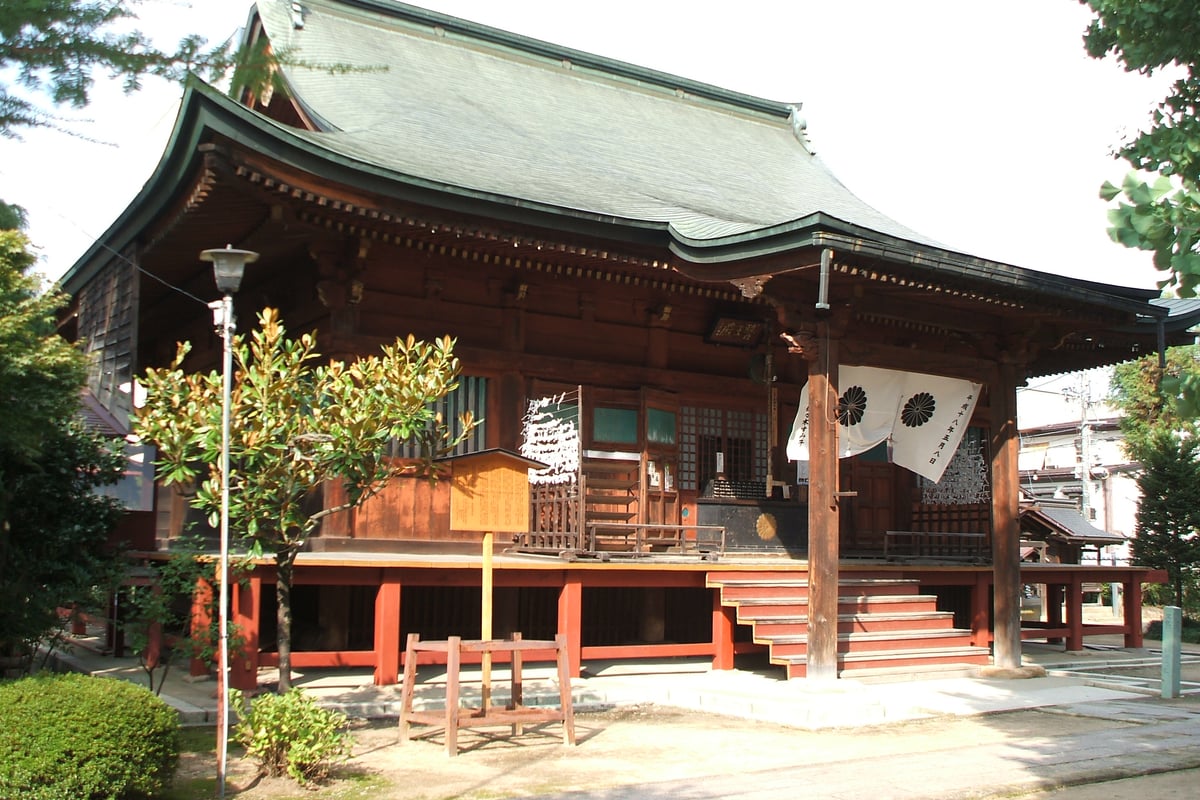
An old temple of the Koyasan Shingon sect said to have been founded around 746 by imperial decree of Emperor Shomu as one of the provincial temples (kokubunji) built nationwide, carrying over 1,250 years of history despite being just a 5-minute walk from Takayama Station in the heart of the city. The main hall, rebuilt during the Muromachi period, is a national Important Cultural Property and enshrines a seated wooden statue of Yakushi Nyorai. The great ginkgo tree on the grounds, said to have been planted at the temple's founding, is a national Natural Monument over 1,200 years old and a well-known spot for autumn foliage. The existing three-story pagoda, rebuilt in 1821, is the only surviving pagoda structure in the Hida region.
An imperial decree by Emperor Shomu, over 1,250 years of history
Hida Kokubun-ji is said to have been founded around 746 as one of the provincial temples and nunneries built nationwide under Emperor Shomu's 741 decree establishing kokubunji temples. Having weathered repeated fires and rebuildings while keeping its Buddhist lineage alive, it is now a Koyasan Shingon sect temple and the first temple of the Hida Thirty-Three Kannon pilgrimage. Despite being just a 5-minute walk from Takayama Station in the city center, it ranks among the oldest temples in the Hida region.
An Important Cultural Property main hall and Hida's only surviving pagoda
The current main hall, rebuilt during the Muromachi period, is a national Important Cultural Property. Its principal image, a seated wooden statue of Yakushi Nyorai, has long been the object of deep devotion as a center of Shingon esoteric Buddhism in Hida. The three-story pagoda on the grounds, rebuilt in 1821, is the only surviving pagoda structure in the Hida region, enshrining Dainichi Nyorai of both the Diamond and Womb Realms.
A great ginkgo over 1,200 years old, a national Natural Monument
The great ginkgo tree towering in front of the main hall is said to have been planted at the temple's founding and is a national Natural Monument said to be over 1,200 years old. Numerous aerial roots hang from its trunk, and it has long been an object of devotion for child-rearing and safe childbirth. During the yellow-foliage season around November, the grounds are covered in a carpet of golden fallen leaves, drawing many worshippers and photography enthusiasts.

![[New Trip] スーツケース キャリーケース 拡張機能付き 機内持ち込み 軽量 大型 キャリーバック Sサイズ 40L 2~3泊 アイボリー | 旅行や出張で荷物が増えても安心!マチ幅5cm拡張で容量約20%アップ。耐衝撃ボディ、信頼のYKKファスナー、海外旅行に欠かせないTSAロック、静音ダブルキャスター、多段階調節キャリーバー搭載、S/M/Lの3サイズ展開。](https://m.media-amazon.com/images/I/61mh9ATG7UL._AC_SL1500_.jpg)

Seasonal Highlights
🌸 Spring (Mar-May)
Cherry blossoms on the grounds and the Important Cultural Property main hall are bathed in gentle spring light.
🍁 Autumn (Sep-Nov)
The great ginkgo's yellow foliage reaches its peak, coloring the grounds in gold.
❄️ Winter (Dec-Feb)
During the snowy season the grounds are wrapped in stillness, and the snow-dusted three-story pagoda adds to the atmosphere.
Visit Tips
- Suggested duration
- About 30-45 minutes including worship and viewing the main hall
- Crowd levels
- Holidays during the November ginkgo season are especially crowded
- Best time to visit
- Morning when light streams in, or weekdays during the yellow-foliage season
| Address | 1-83 Sowa-cho, Takayama, Gifu |
|---|---|
| Hours | 9:00-16:00 (main hall and treasure hall viewing, closed Dec 31-Jan 1); grounds open for worship anytime |
| Admission | Free to enter the grounds; main hall viewing adults ¥500, elementary/junior high students ¥400 |
| Official Website | Visit official website |
Access
- 5 min walk from Takayama Station (JR Takayama Line)