Takayama Jinya
高山陣屋
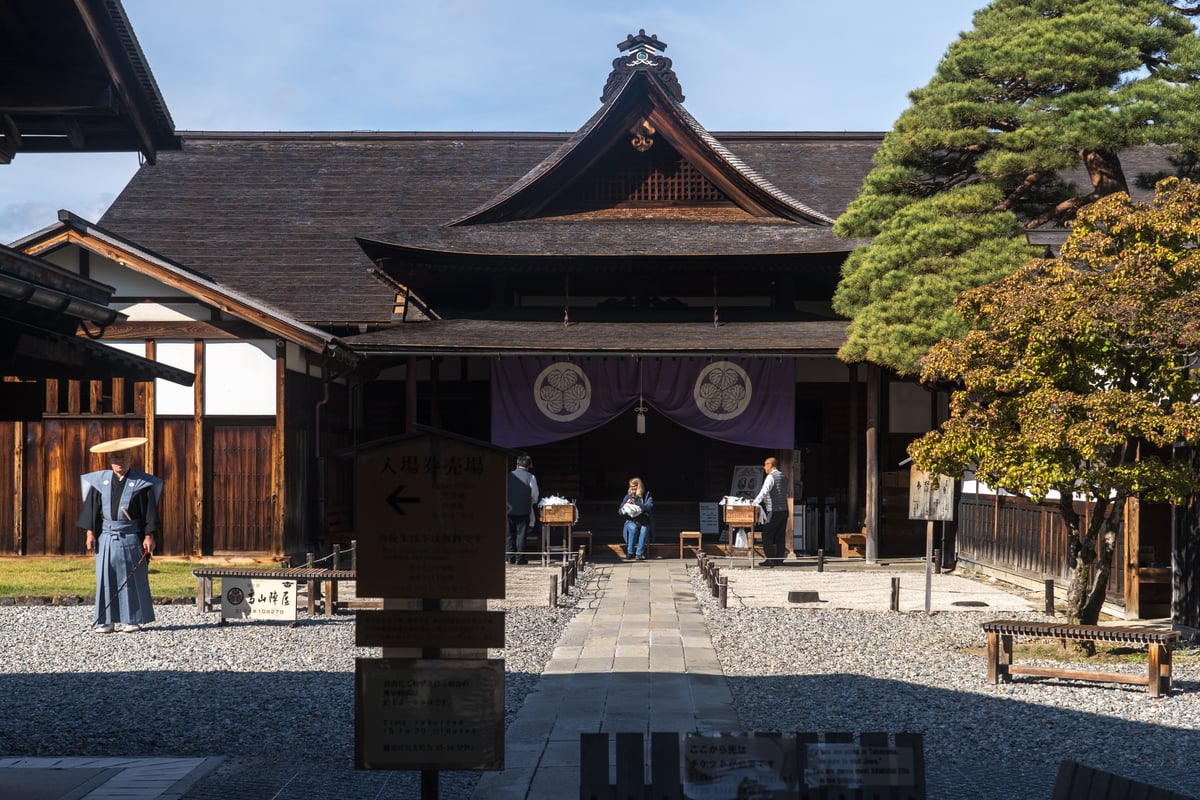
A group of buildings that once housed the magistrate's and intendant's office through which the Edo shogunate governed Hida Province as its direct territory, designated a national historic site as the only surviving Edo-period jinya (regional administrative office) building complex in Japan. After Hida became shogunate territory in 1692, 25 successive magistrates and intendants conducted government affairs here for about 176 years until the Meiji Restoration. The government office, administrative hall, intendant's living quarters and kitchen, and the courtroom (Oshirasu) are open to the public, either preserved as they were or restored, letting visitors closely see the working spaces of Edo-period officials and the setting of civil trials. The rice storehouse (Okura) on the grounds is Japan's oldest and largest surviving storehouse and is also used to display historical materials about Hida. Conveniently located as a starting point for touring Takayama's old townscape, a morning market is also held in the plaza in front of the jinya.
Japan's only surviving Edo-period magistrate's office building
Takayama Jinya is the magistrate's and intendant's office established after the Edo shogunate made Hida Province shogunate territory in 1692, following the removal of the Kanamori clan. By the end of the Edo period, 25 successive magistrates and intendants had been posted here, overseeing administration, taxation, and trials across all of Hida. Because the buildings continued to be used as prefectural offices and the like after the Meiji era, they were preserved, and of the more than 60 jinya said to have once existed nationwide, this is the only one whose main buildings survive. Restoration of the main sections was completed in 1996, and it is designated a national historic site.
The government office, courtroom, and intendant's living quarters
Inside, visitors can view the government office where officials worked, the administrative hall where rice tax was managed, and the living quarters and kitchen where the intendant and family lived. A particular highlight is the gravel-floored courtroom known as Oshirasu, where actual Edo-period civil and criminal trials were held. Torture implements from the period are also displayed, offering a concrete image of the Edo-era governance system in this valuable space.
Japan's oldest and largest storehouse, and the morning market
The rice storehouse (Okura) on the jinya grounds is said to have been built in the Kanbun era (late 1600s) and is considered Japan's oldest and largest surviving storehouse, its interior displaying materials on Hida's history and the jinya. The "Jinya-mae Morning Market" is also held each morning in the plaza in front of the jinya, offering local farmers' vegetables, pickles, and folk crafts. Within walking distance of Takayama's old townscape (Sanmachi) and the Miyagawa Morning Market, it serves as a central hub for Takayama sightseeing.

![[New Trip] スーツケース キャリーケース 拡張機能付き 機内持ち込み 軽量 大型 キャリーバック Sサイズ 40L 2~3泊 アイボリー | 旅行や出張で荷物が増えても安心!マチ幅5cm拡張で容量約20%アップ。耐衝撃ボディ、信頼のYKKファスナー、海外旅行に欠かせないTSAロック、静音ダブルキャスター、多段階調節キャリーバー搭載、S/M/Lの3サイズ展開。](https://m.media-amazon.com/images/I/61mh9ATG7UL._AC_SL1500_.jpg)

Seasonal Highlights
🌸 Spring (Mar-May)
Cherry blossoms bloom in front of the jinya, drawing many tourists together with the morning market.
🍁 Autumn (Sep-Nov)
Trees on the grounds turn autumn colors, offering a beautiful contrast with the white-walled storehouses.
❄️ Winter (Dec-Feb)
Opening hours are shortened during the snowy season, and the snow-dusted roof tiles add to the atmosphere.
Visit Tips
- Suggested duration
- About 45-60 minutes including the interior and storehouse exhibits
- Crowd levels
- Weekend and holiday mornings, especially during morning market hours, get crowded nearby
- Best time to visit
- Right after opening in the morning, or just before closing in the evening
| Address | 1-5 Hachiken-machi, Takayama, Gifu |
|---|---|
| Hours | 8:45-17:00 (March-October), 8:45-16:30 (November-February); last admission 30 minutes before closing |
| Admission | Adults ¥440, high school age and under free (groups of 30+: ¥390) |
| Official Website | Visit official website |
Access
- 10 min walk from Takayama Station (JR Takayama Line)