Kusakabe Folk Museum
日下部民藝館
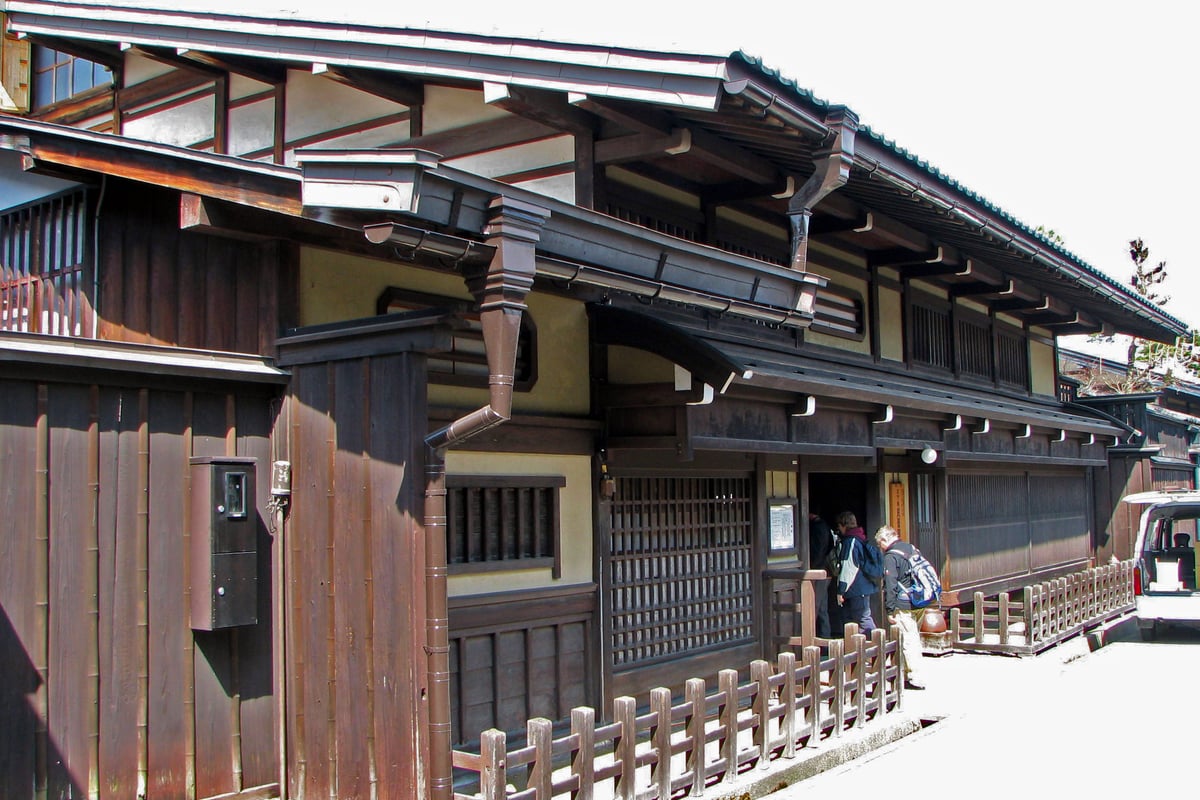
A folk art museum open to the public in the former residence of the Kusakabe family, a wealthy merchant house that prospered as a purveyor to the Hida magistrate's office during the Edo period, when Hida was shogunate territory. The building, destroyed in the great fire of 1875 and rebuilt in 1879, is a national Important Cultural Property that faithfully conveys traditional Edo-period townhouse architecture. The bold, soaring beam structure visible from the earthen-floor entryway is described as having a "masculine beauty" and is known as a space embodying the skills of Hida's master carpenters. The storehouse holds artworks and folk crafts passed down through the Kusakabe family, everyday tools from the late Edo to Meiji periods, and Shibukusa ware ceramics, offering a glimpse of a wealthy merchant's former way of life. Often visited together with the neighboring Yoshijima Heritage House, it's a leading destination for viewing traditional Hida architecture.
The residence of the Kusakabe family, purveyors to shogunate-territory Hida
The Kusakabe family was a merchant house that prospered during the Edo period as a purveyor to the magistrate's office of Hida, then shogunate territory. Their former residence burned in the great fire of 1875, but was rebuilt in 1879, faithfully carrying on Edo-period architectural style as a townhouse that has been carefully preserved to this day. It was designated a national Important Cultural Property in 1966.
A bold beam structure described as "masculine"
The building's greatest highlight is the beam structure of the open, soaring space viewed from the entryway's earthen floor. Powerful beams, layered again and again around a thick central pillar, are breathtaking, and contrasted with the delicate, "feminine" beam structure of the neighboring Yoshijima Heritage House, this one is described as having a "masculine beauty." It's a valuable space for experiencing the advanced wooden architectural techniques of Hida's master carpenters.
Heirloom artworks and everyday tools
The exhibition room, using the rear storehouse, displays artworks and folk crafts handed down through the Kusakabe family, including a household Buddhist altar said to have cost 300 ryo (equivalent to roughly 100 million yen today), a palanquin and bridal costume used by the 9th head of the family's bride, everyday tools from the late Edo to Meiji periods, and Shibukusa ware, an old Hida ceramic style.

![[New Trip] スーツケース キャリーケース 拡張機能付き 機内持ち込み 軽量 大型 キャリーバック Sサイズ 40L 2~3泊 アイボリー | 旅行や出張で荷物が増えても安心!マチ幅5cm拡張で容量約20%アップ。耐衝撃ボディ、信頼のYKKファスナー、海外旅行に欠かせないTSAロック、静音ダブルキャスター、多段階調節キャリーバー搭載、S/M/Lの3サイズ展開。](https://m.media-amazon.com/images/I/61mh9ATG7UL._AC_SL1500_.jpg)

Seasonal Highlights
❄️ Winter (Dec-Feb)
The museum closes every Tuesday from December to February, so it's recommended to check closure days before a winter visit.
Visit Tips
- Suggested duration
- About 30-45 minutes
- Crowd levels
- Many tourists visit together with the neighboring Yoshijima Heritage House, and the museum can get crowded midday
- Best time to visit
- Right after opening in the morning for a relatively relaxed visit
| Address | 1-52 Oshin-machi, Takayama, Gifu |
|---|---|
| Hours | 9:00-16:30 (9:00-16:00 December-February) |
| Admission | Adults ¥500, elementary/junior high students ¥300, preschoolers free |
| Official Website | Visit official website |
Access
- 15 min walk from Takayama Station (JR Takayama Line)