Higashiyama Walking Course
東山遊歩道
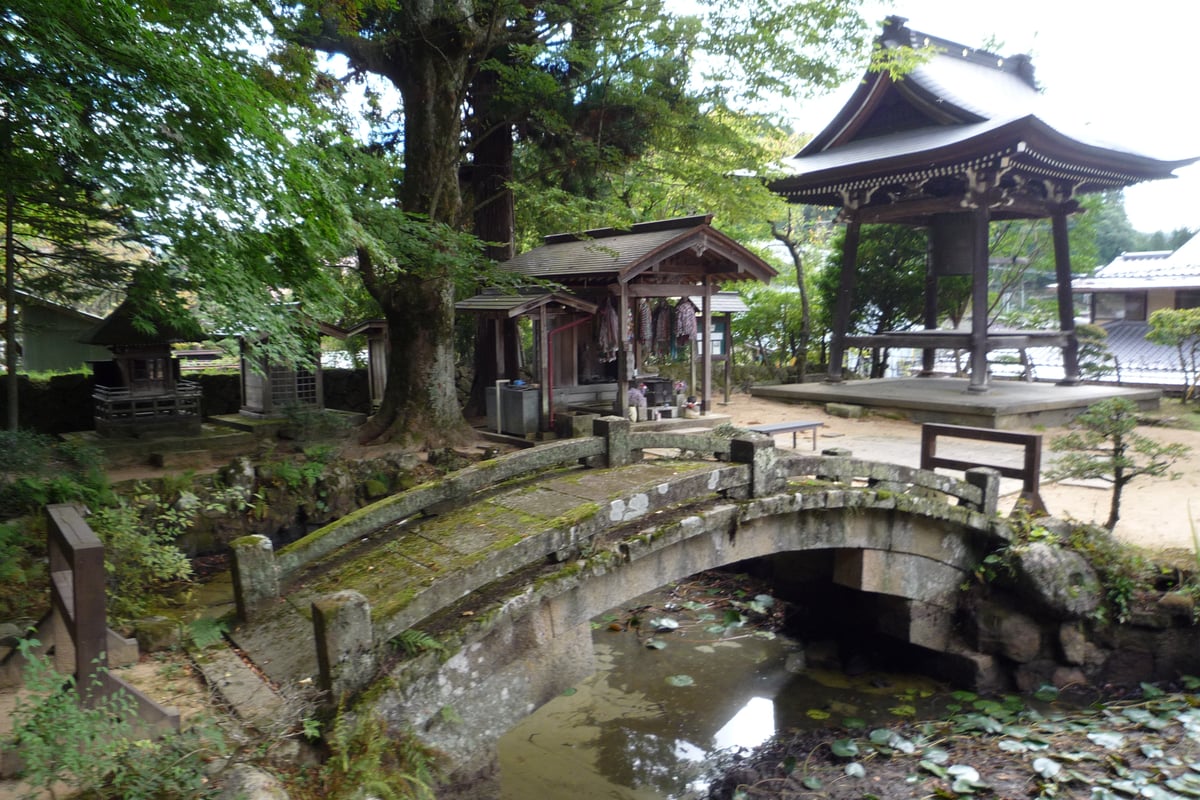
A roughly 5.5-km walking course running along the foothills east of Takayama Castle town. It originates from the first Takayama domain lord, Kanamori Nagachika, gathering temples and shrines on the east side of the castle for both defense and spiritual protection when developing the castle town, and about 13 temples and shrines, including Unryu-ji, Sogen-ji, and Dairyu-ji, are dotted along the route, forming a "corridor of history." Following the murmur of the Enako River away from the bustle of the old town, the path winds through tree-lined lanes, letting visitors quietly visit each temple's gate, garden, and historical sites connected to the Kanamori clan. The endpoint, Shiroyama Park, is a hillside area preserving the remains of the Sengoku-era Takayama Castle, and is also among Japan's selected 100 best forest-bathing sites. Walking the full route takes about two hours, offering a taste of Takayama's quiet charm, distinct from the old townscape.
The origin of the temple town and walking course built by Kanamori Nagachika
Kanamori Nagachika, the first Takayama domain lord who developed the castle town, gathered temples and shrines along the foothills east of the castle for both defense and spiritual protection of the town. This was the start of the "Higashiyama temple town," and the walking path developed from the Meiji era onward is today's Higashiyama Walking Course. Walking east from the old town along Route 158 for about 10 minutes brings you to the temple district, where the roughly 5.5-km route continues from Unryu-ji to Shiroyama Park.
About 13 temples and shrines dotting the route
About 13 temples and shrines are dotted along the walking course, including Unryu-ji, Sogen-ji, Dairyu-ji, Daio-ji, Tensho-ji, Zenno-ji, and Hokke-ji. Sogen-ji, the family temple of the first Takayama castle lord Kanamori Nagachika, is known for its city-designated scenic garden and main hall, while Dairyu-ji is known as a temple connected to Kanamori Yorinao. Each temple has its own highlights, from gates to bell towers to gardens, making for an enjoyable temple-hopping walk.
Shiroyama Park at the endpoint, and forest bathing
Shiroyama Park, at the endpoint of the walking course, is a hillside area preserving the remains of Takayama Castle, once said to be one of Japan's finest mountain castles during the Sengoku period. Blessed with rich nature and a hushed atmosphere, it has been selected as one of Japan's 100 best forest-bathing sites. Walking the full route takes about two hours, letting visitors enjoy both the temple-hopping and the walk itself, surrounded by trees.

![[New Trip] スーツケース キャリーケース 拡張機能付き 機内持ち込み 軽量 大型 キャリーバック Sサイズ 40L 2~3泊 アイボリー | 旅行や出張で荷物が増えても安心!マチ幅5cm拡張で容量約20%アップ。耐衝撃ボディ、信頼のYKKファスナー、海外旅行に欠かせないTSAロック、静音ダブルキャスター、多段階調節キャリーバー搭載、S/M/Lの3サイズ展開。](https://m.media-amazon.com/images/I/61mh9ATG7UL._AC_SL1500_.jpg)

Seasonal Highlights
🌸 Spring (Mar-May)
Fresh greenery and cherry blossoms color the walking course, offering a refreshing stroll.
🌿 Summer (Jun-Aug)
The tree-shaded path stays cooler than the city streets, making it suitable for a summer walk too.
🍁 Autumn (Sep-Nov)
The autumn-colored roof tiles of the temples are beautiful, marking the best season in the Higashiyama temple district.
❄️ Winter (Dec-Feb)
The path can be icy during the snowy season, so cold-weather gear and non-slip footwear are recommended.
Visit Tips
- Suggested duration
- About 2 hours for the full route, about 60-90 minutes for just the main temples
- Crowd levels
- Fewer tourists than the old town, easy to walk quietly year-round
- Best time to visit
- A pleasant morning; an earlier time is recommended during the autumn-leaf season
| Address | Wakatatsu-cho, Takayama, Gifu (starting near Unryu-ji, ending at Shiroyama Park) |
|---|---|
| Hours | Open for walking anytime (passable 24 hours; not recommended at night due to limited lighting) |
| Admission | Free |
| Official Website | Visit official website |
Access
- 13 min walk from Takayama Station (On foot from the east exit along the Enako River, JR Takayama Line)