Jufuku-ji Temple
寿福寺
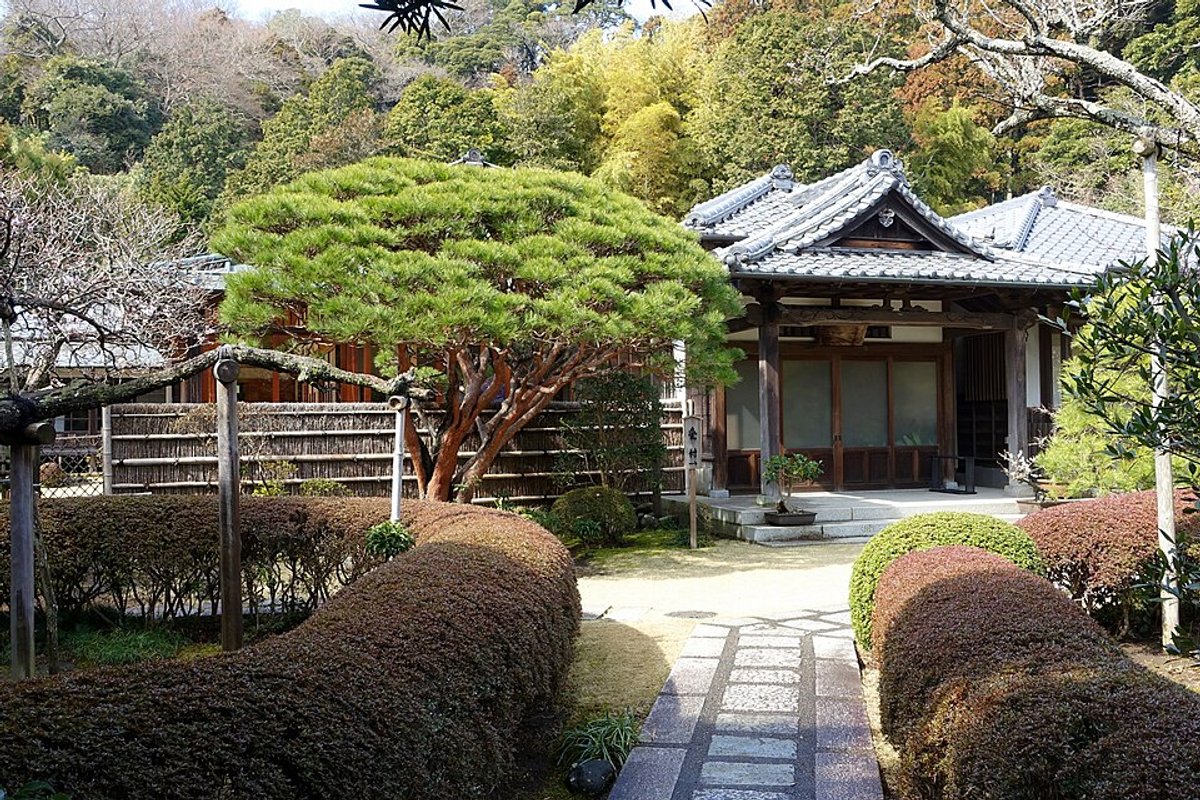
Founded in 1200 when Hojo Masako invited the Zen priest Eisai following the death of her husband Minamoto no Yoritomo, this is Kamakura's oldest Zen temple, ranking third among the Five Mountains of Kamakura. Its long stone-paved approach leads to a moss-covered, deeply quiet space at the back of the grounds. The "yagura" (cave tombs) at the rear are said to hold the graves of Hojo Masako and Minamoto no Sanetomo, drawing many visitors to this site tied to the Kamakura shogunate.
The stone-paved approach
The straight, stone-paved path leading from the main gate is lined on both sides with cedar trees, creating a tunnel-like atmosphere. Quietly welcoming visitors, this approach is one of the classic images of Kamakura and appears in many photographs. Its stillness heightens the crisp atmosphere of the grounds beyond.
The graves of Hojo Masako and Minamoto no Sanetomo
At the back of the grounds are scattered "yagura" (cave tombs) dug during the Kamakura period, including stone stupas said to mark the graves of Hojo Masako and Minamoto no Sanetomo. For history enthusiasts, this resting place of figures who helped found the Kamakura shogunate holds special significance. The yagura area cannot be entered outside viewing hours, so an early visit is recommended.
History
Minamoto no Yoritomo had wished to build a Zen temple on this site, and after his death, Hojo Masako carried out his wishes and founded the temple. Its founding priest, Eisai, is renowned as the figure who introduced Rinzai Zen and tea to Japan. Under the patronage of the Hojo clan, it held the prestigious rank of third among the Five Mountains of Kamakura, though most of its original seven-hall complex has since been lost, leaving only the main gate and main hall today.

![[New Trip] スーツケース キャリーケース 拡張機能付き 機内持ち込み 軽量 大型 キャリーバック Sサイズ 40L 2~3泊 アイボリー | 旅行や出張で荷物が増えても安心!マチ幅5cm拡張で容量約20%アップ。耐衝撃ボディ、信頼のYKKファスナー、海外旅行に欠かせないTSAロック、静音ダブルキャスター、多段階調節キャリーバー搭載、S/M/Lの3サイズ展開。](https://m.media-amazon.com/images/I/61mh9ATG7UL._AC_SL1500_.jpg)

Seasonal Highlights
🌸 Spring (Mar-May)
In spring, the trees along the approach bud with soft new green — an ideal season for a quiet walk along the path.
🌿 Summer (Jun-Aug)
Shaded by deep trees, the approach stays cool even in summer, with sunlight filtering through the leaves onto the moss in an almost magical scene.
🍁 Autumn (Sep-Nov)
During the foliage season, the stone-paved approach turns brocade-like colors, best from mid-to-late November.
❄️ Winter (Dec-Feb)
The contrast between the bare winter trees and the green moss is beautiful. With few visitors, you can experience Kamakura's characteristic stillness.
Visit Tips
- Suggested duration
- About 30-45 minutes
- Crowd levels
- Relatively few tourists, one of the quieter spots in Kamakura. The approach itself can always be viewed.
- Best time to visit
- When morning light filters through — beautiful with the moss, and great for photos.
| Address | 1-17-7 Ogigayatsu, Kamakura, Kanagawa |
|---|---|
| Hours | Open access to the grounds (grave/yagura viewing 9:00-15:00) |
| Admission | Free to enter the grounds |
| Official Website | Visit official website |
Access
- 7 min walk from Kamakura Station (West Exit) (JR Yokosuka Line / Enoshima Electric Railway)