Owakudani
大涌谷
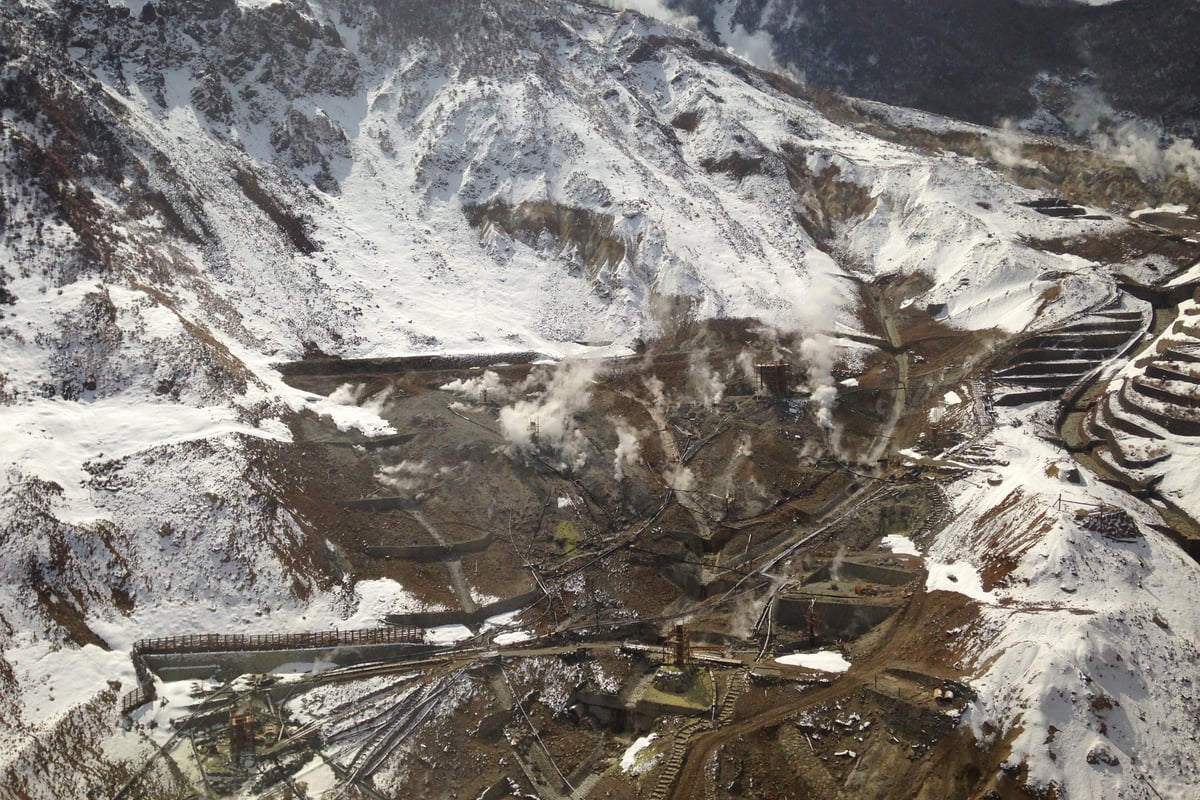
A crater formed by an explosive eruption on the northwest slope of Mt. Kami, a central cone of the Hakone volcano, from which steam still rises today. Formed by a phreatic eruption about 3,000 years ago, it was once called "Great Hell" but was renamed to its current name to mark Emperor Meiji's visit in 1873. Amid the barren volcanic landscape and drifting scent of sulfur, the local specialty "black eggs" are boiled in the heat of the hot-spring ponds, turning their shells black, and are said to add seven years to your life if you eat one. Historic sites tied to faith are also scattered about, including the Enmei Jizo statue associated with Kobo Daishi, and on clear days, Mount Fuji can be seen. As a major stop on the Hakone Ropeway, with the Owakudani Kurotamago-kan and other shops nearby, it is one of the most bustling spots in Hakone sightseeing.
An explosive crater formed 3,000 years ago
This explosive crater was formed by a phreatic eruption on the north slope of Mt. Kami, a central cone of the Hakone volcano, about 3,000 years ago. Once called "Great Hell" for its hellish appearance, it was renamed to the current "Owakudani" ahead of a visit by Emperor Meiji and Empress in August 1873. White steam still rises from various points in the valley today, a remnant of ongoing volcanic activity.
The famous black eggs and Owakudani Enmei Jizo
Chicken eggs boiled in Owakudani's hot mud and hot-spring pools turn completely black due to iron sulfide, and are cherished as the famous "black eggs." Eating one is said to add seven years to your life, and they're sold at the Owakudani Kurotamago-kan and other shops. The Owakudani Enmei Jizo, said to have been carved by Kobo Daishi, moved by the desolate scenery, is still deeply revered today as a Jizo of longevity and safe child-rearing.
The nature trail and caution regarding volcanic gas
Due to heightened volcanic activity, the nature trail within the Owakudani grounds can currently only be entered as part of a paid, guided tour (several times a day, limited capacity, advance reservation required). Participants must wear helmets, and tours may be canceled if volcanic gas concentrations exceed standard levels. Visitors with asthma or respiratory or heart conditions are advised against visiting.

![[New Trip] スーツケース キャリーケース 拡張機能付き 機内持ち込み 軽量 大型 キャリーバック Sサイズ 40L 2~3泊 アイボリー | 旅行や出張で荷物が増えても安心!マチ幅5cm拡張で容量約20%アップ。耐衝撃ボディ、信頼のYKKファスナー、海外旅行に欠かせないTSAロック、静音ダブルキャスター、多段階調節キャリーバー搭載、S/M/Lの3サイズ展開。](https://m.media-amazon.com/images/I/61mh9ATG7UL._AC_SL1500_.jpg)

Seasonal Highlights
❄️ Winter (Dec-Feb)
A season with a high probability of crisp air and clear views of Mount Fuji.
Visit Tips
- Suggested duration
- About 60-90 minutes including a stroll and shopping
- Crowd levels
- Both the parking lot and ropeway get very crowded during the autumn-leaf season and long holiday periods
- Best time to visit
- Morning on a clear day with crisp air
| Address | 1251 Sengokuhara, Hakone-machi, Ashigarashimo District, Kanagawa |
|---|---|
| Hours | Open access for viewing (Owakudani Kurotamago-kan 9:00-16:40; guided entry to the nature trail requires reservation) |
| Admission | Free to enter the Owakudani grounds (guided entry to the nature trail: ¥800 contribution) |
| Official Website | Visit official website |
Access
- 1 min walk from Owakudani Station (Right at Owakudani Station on the Hakone Ropeway)
- 50 min walk from Hakone-Yumoto Station (About 50 minutes by Hakone Tozan Bus, get off right at "Owakudani")